摘要
为探究表面机加工对核电用奥氏体不锈钢应力腐蚀开裂(SCC)行为的影响,考察了304L和316L两种不锈钢在300 ℃高温高压水中的氧化行为,并采用电化学方法对氧化膜的腐蚀性能进行评估,同时利用U弯样品法研究了其在高温高压水环境下的SCC,分析了表面机加工对SCC的影响。结果显示:随着氧化时间的延长,样品表面的氧化物颗粒不断增加,浸泡80 d后,两种材料的氧化膜厚度可达到微米级;随着浸泡时间的延长,两种不锈钢的抛光和机加工样品表面氧化膜的耐蚀性均有所增强,但机加工样品的氧化膜耐蚀性劣于抛光样品。在300 ℃高温水环境下浸泡365 d后,仅部分304L不锈钢机加工样品萌生应力腐蚀裂纹;在含500 mg/L氯离子的环境下,浸泡100 d后两种不锈钢机加工样品在变质层处开始萌生裂纹,浸泡365 d后,萌生的应力腐蚀裂纹数量和长度均显著增加。无论是否添加氯离子,浸泡365 d后所有抛光样品均未萌生应力腐蚀裂纹。可知,表面机加工一方面增加了不锈钢表面的残余应力水平,另一方面破坏了样品表面的微观结构,形成了变质层,导致高温水环境下形成的氧化膜保护性降低,共同导致了应力腐蚀裂纹的萌生。氯离子对应力腐蚀开裂的裂纹萌生和扩展均有显著的促进作用,在氯离子含量为500 mg/L的高温高压水环境下裂纹扩展速率增加约15倍。
Abstract
To investigate the effect of surface machining on the SCC behavior of austenitic SS used in nuclear power plants, this paper focuses on the study of the oxidation behavior of two types of 304L and 316L SSs in 300 ℃ high temperature water, and evaluates the corrosion resistance of the oxide film using electrochemical methods. SCC tests were conducted on both types of SSs using U-bend samples in high temperature water environment. The influence of surface machining on SCC was analyzed. The results show that the oxide particles on the surface of the SS samples continusly grew as the oxidation time increased. After 80 days of immersion, the thickness of the oxide film on both materials reached the micron level. With prolonged immersion, the corrosion resistance of both polished and machined samples of the two SSs improved, while the corrosion resistance of the oxide film on the machined samples were inferior to those of the polished samples. After immersion in 300 ℃ high-temperature water environment for 365 days, only some machined samples of 304L SS initiated SCC cracks. In an environment containing 500 mg/L chloride ions, cracks began to initiate at the deformation layer of the machined samples for both SSs after 100 days of immersion. Both the number and length of cracks increased significantly after 365 days of immersion. No SCC cracks were observed in any of the polished samples after 365 days of immersion regardless of the presence of chloride ions. Analysis of the experimental results indicates that surface machining increases the residual stress levels on the stainless steel surfaces while also disrupting the microstructure, leading to the formation of an altered layer. This results in a reduced protective capability of the oxide film formed in the high-temperature water environment, contributing to the initiation of SCC cracks. Chloride ions significantly promoting promote both the initiation and propagation of SCC cracks; in a high-temperature, high-pressure water environment with a chloride ions concentration of 500 mg/L, the crack propagation rate increased by approximately 15 times in the present study.
奥氏体不锈钢具有优异综合性能,如耐蚀性、塑韧性等,广泛应用于能源、电力和化工领域。304L和316L是最常用的奥氏体不锈钢之一,在核电站中常被用做一回路主管道材料[1-3]。一回路主管道长期服役在高温高压水环境下,运行过程中的主管道长期处于拉应力状态和腐蚀环境,因此应力腐蚀开裂是不锈钢主管道材料常见的失效方式[4-5]。目前,国内外对不锈钢在高温高压水环境下的应力腐蚀开裂方面已开展了大量的研究,对裂纹萌生机理也有了较为深入的研究[6-10]。Was等[11]研究304、316、625、690合金4种材料在高温高压水环境下的应力腐蚀时,发现了4种材料的应力腐蚀裂纹萌生与高温高压水环境下的氧化膜破裂之间有密切关系,揭示了高温高压水氧化对应力腐蚀开裂的影响机制。Meng和Du等[12-13]研究了不同的高温高压水化学环境对奥氏体不锈钢应力腐蚀开裂的影响,获得了溶解氢和溶解氧对应力腐蚀开裂的影响规律。
表面机加工是工件服役前必不可少的最后一道程序,会引起表面微结构损伤、引入残余应力,并因此诱导应力腐蚀开裂[14-18]。但是,关于核电环境下的不锈钢应力腐蚀失效研究主要集中在工件的服役环境、化学成分和微观组织的影响等方面,并有部分研究集中在整体机加工的影响上,如锻造、轧制后的应力腐蚀开裂行为,而对于核电环境下表面状态对工件应力腐蚀的影响则相对较少。Zhang等[19]的研究结果表明,316不锈钢机加工残余应力超过190 MPa后,将存在较大的应力腐蚀开裂风险。Wang等[20]的研究发现,表面机加工会导致不锈钢在高温高压水环境下的表面氧化膜形成过程发生变化,并进一步对应力腐蚀开裂性能产生不良的影响。Du等[21]在研究水化学对316/316L不锈钢在模拟核电环境下的应力腐蚀开裂时发现,溶解氧和氯离子会显著促进裂纹的扩展。目前虽然针对机加工变质层、水化学环境对不锈钢材料在高温水环境下的应力腐蚀开裂已开展了部分研究,但表面变质层影响应力腐蚀开裂的影响机理尚不清楚,变质层对氧化膜耐蚀性的影响尚缺乏统一的认识,氯离子对不锈钢应力腐蚀开裂的影响程度也不清楚。
本文以304L和316L奥氏体不锈钢为研究对象,开展不同表面机加工样品在高温高压水环境下的氧化行为研究,并用电化学方法对氧化膜的耐蚀性进行评价;采用U弯型样品在高温高压釜中开展不同表面加工状态材料的应力腐蚀开裂实验,研究表面机加工影响应力腐蚀开裂的行为机制及氯离子对应力腐蚀开裂的促进程度,分析了表面机加工和氯离子对不锈钢应力腐蚀开裂的影响机理。
1 实验
1.1 材料与样品制备
本研究所用材料为304L和316L奥氏体不锈钢,主要合金元素的含量如表1所示,其金相组织如图1所示,组织均为典型的奥氏体相。
表1实验用304L和316L奥氏体不锈钢的化学成分(质量分数/%)
Table1Chemical composition of 304L and 316L stainless steels (SSs) (wt.%)

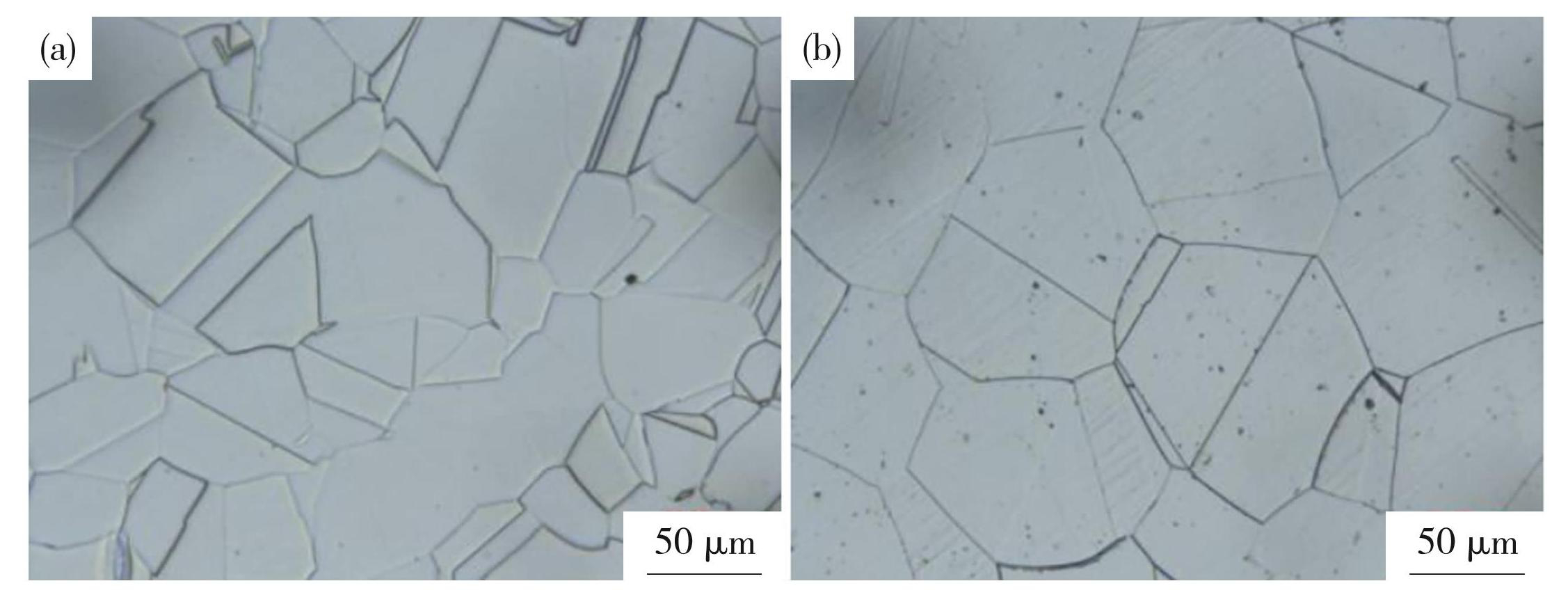
图1不锈钢的金相组织
Fig.1Metallographic structure of SSs:(a)304L;(b)316L
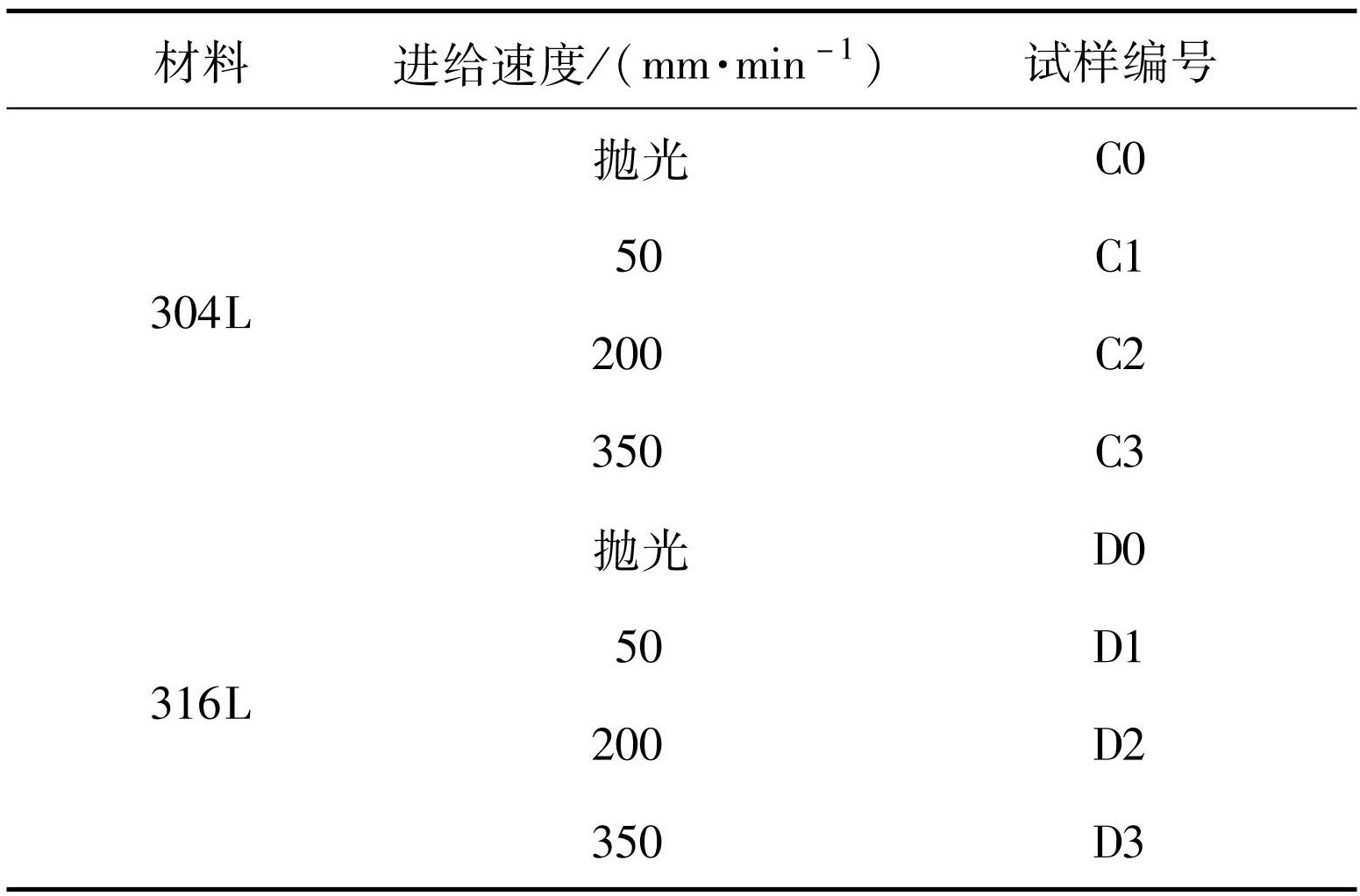
参考实际工件的加工方法和过程,本研究样品制备采用铣削的方法,主轴转速设为500 r/min,切削深度设为0.05 mm,进给速度设为50、200和350 mm/min。为了方便叙述,对应不同进给速度下304L和316L两种不锈钢分别标记C1、C2、C3和D1、D2、D3,表面抛光后的样品分别标记为C0、D0,具体如表2所示。本文的机加工变质层是指以上铣削机加工处理后在样品表面引起的一层微观组织变化层。表面抛光采用的方法是首先打磨至2 000#砂纸,然后进行机械抛光至镜面状态。
表2机加工参数及相应的试样编号
Table2Machining parameters and corresponding specimen numbers
1.2 浸泡与腐蚀实验
本研究中的氧化膜制备和 U 弯应力腐蚀实验均在高压釜内进行,实验环境为模拟压水堆核电站一回路环境。所用溶液为硼酸-氢氧化锂溶液,所有试剂均为化学分析纯,高温高压水溶液质量浓度分别为6 291.67 和 15.12 mg/L,实验温度为 300℃,压力约 10 MPa。实验开始前需要除氧,通过通入氮气并保持1 h以上除氧,重复不少于3次。为了对比机加工对氧化膜形成的影响,两种不锈钢的抛光样品也放入高压釜中共同实验。氧化膜制备过程中对不同氧化时间的样品进行标记,如C010代表C0样品氧化10 d。
用于电化学测试的设备是由 Solarton 公司生产的 12608W 型电化学工作站,交流阻抗(Electrochemical Impedance Spectroscopy,EIS)测试使用的溶液是质量分数为3.5%的氯化钠溶液,实验温度为25℃。实验过程是在标准的三电极体系中进行,参比电极为饱和甘汞电极,辅助电极为铂电极。交流阻抗测试频率为0.01~1×10⁵ Hz。
本研究中样品的应力腐蚀实验是在高温高压水环境下的U弯应力腐蚀实验。高温高压水环境下的U弯应力腐蚀实验环境与氧化膜浸泡实验一致,部分实验在硼酸-氢氧化锂溶液的基础上额外添加了500 mg/L 的氯离子,添加方式为氯化钠。实验过程如下:将样品切割为10 mm×100 mm×3 mm的长条状立方体,样品两端打孔,其中一个面进行表面机加工(尺寸10 mm×100 mm的面,为U弯外表面),其他面打磨至1 200#砂纸。U弯型样品制备过程中,夹住样品两端,然后用试验机在样品中部下压,弯制成一个直径20 mm的半圆,两端呈平行状,样品整体呈U形,然后用螺栓将两端固定,所用螺栓与U弯样品为同一材质。弯制完成后的样品如图2所示。将弯制完成后的样品放入高压釜中进行实验,至预定时间后取出样品进行观察。
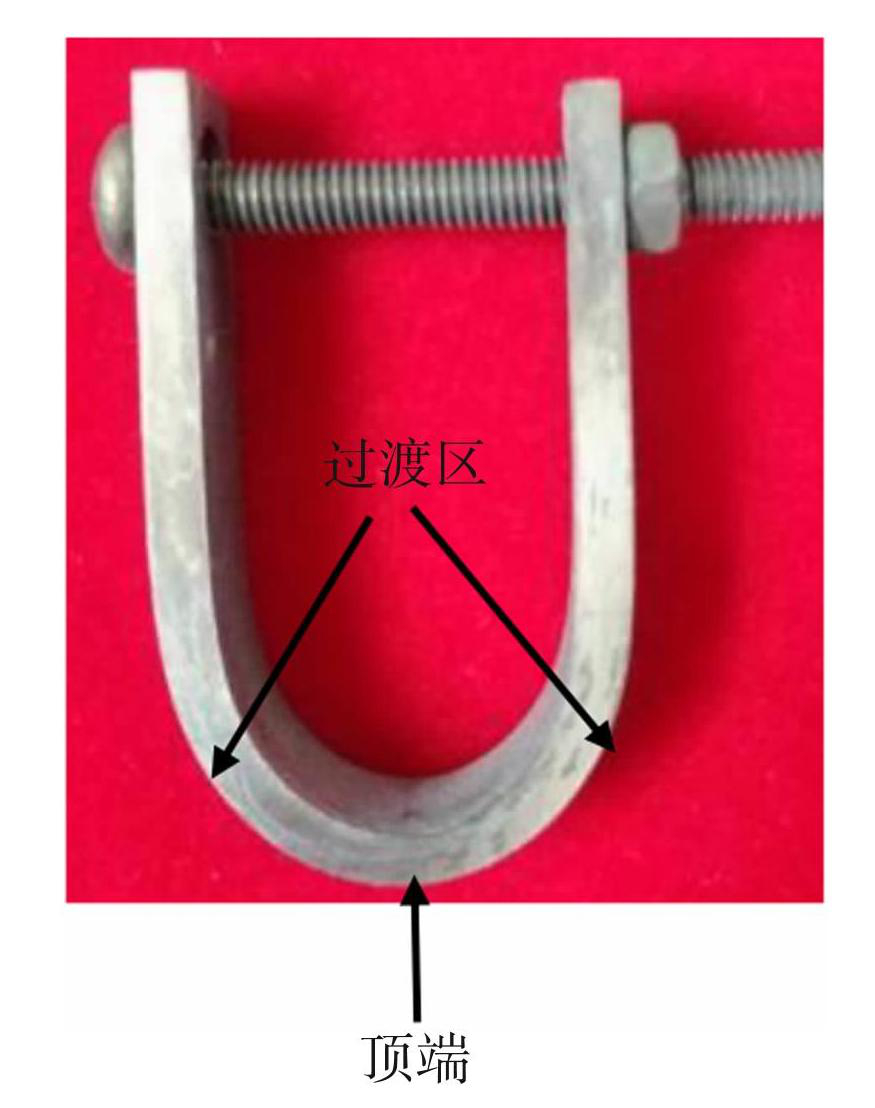
图2弯制完成后的U弯样品
Fig.2U-bend specimen after bending for SCC test
1.3 残余应力测试与表面观察
利用X射线衍射仪对机加工后的样品进行残余应力测试,所用设备型号为Proto iXRD,配备Mn-Kα放射源,工作电压和电流分别为20 kV和4 mA。U弯样品制备完成后,对U形样品的顶端和过渡区域分别进行残余应力测试,测试结果显示,两侧过渡区残余应力水平相近。测试过程中,所有样品的测量均以平行于加工刀痕(试样宽度方向)为X轴,以垂直于刀痕(试样长度方向) 为Y轴。扫描电镜用于观察样品表面的形貌、裂纹萌生特征等,观察前样品需经过超声波清洗吹干。采用ZEISS SUPRA55场发射型扫描电镜观察。
2 结果与讨论
2.1 氧化膜的耐蚀性研究
2.1.1 氧化膜的形貌
图3所示是304L和316L两种不锈钢抛光和机加工样品在高温高压釜中浸泡10和80 d后氧化膜表面和横截面的形貌,可以看出,不同时间氧化后的样品表面均布满了氧化物颗粒,特别是C080样品(图3(b))表面形成了较大的氧化物颗粒。对比不同浸泡时间的样品发现,氧化物颗粒随着浸泡时间的延长呈长大趋势;对比不同表面状态的样品发现,抛光样品表面的氧化物颗粒更多,分布更加均匀。机加工样品表面的粗糙度较大,起伏频繁,一些氧化物颗粒的尺寸已超过了样品表面起伏的最小单元,因此对于氧化物颗粒来说,基体很不平整,导致氧化物颗粒难以附着,机加工后样品的氧化物颗粒比较少。图3(g)~(i)所示为不同样品浸泡80 d后样品横截面的形貌,可以看出,304L不锈钢抛光后样品形成的氧化膜厚度约1 μm,氧化膜完整均匀,316L不锈钢的氧化膜略薄一些,这归因于316L不锈钢的耐蚀性好、氧化速度慢。而机加工后的316L不锈钢的氧化膜基本完整,厚度不均匀,且在观察横截面时,因表面粗糙较大难以观察到整体形貌。
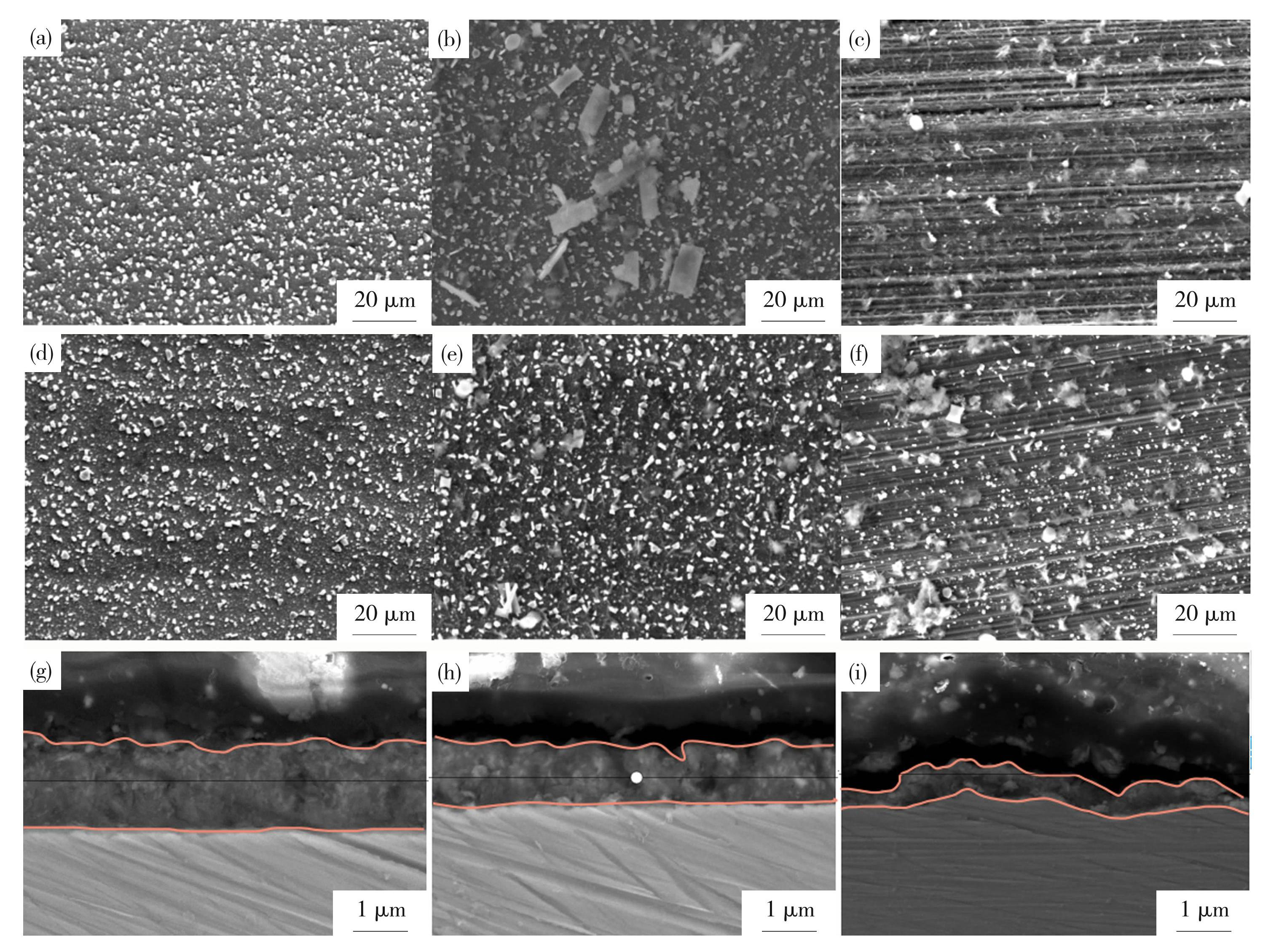
图3304L和316L两种不锈钢样品浸泡10和80 d后氧化膜的表面及横截面形貌:(a)C010;(b)C080;(c)C380;(d)D010;(e)D080;(f)D380;(g)C080横截面;(h)D080横截面;(i)D380横截面
Fig.3Surface and cross-sectional morphology of oxide film on 304L and 316L SSs after immersion for 10 and 80 days: (a) C010; (b) C080; (c) C380; (d) D010; (e) D080; (f) D380; (g) cross-section of C080; (h) cross-section of D080; (i) cross-section of D380
2.1.2 氧化膜的耐蚀性
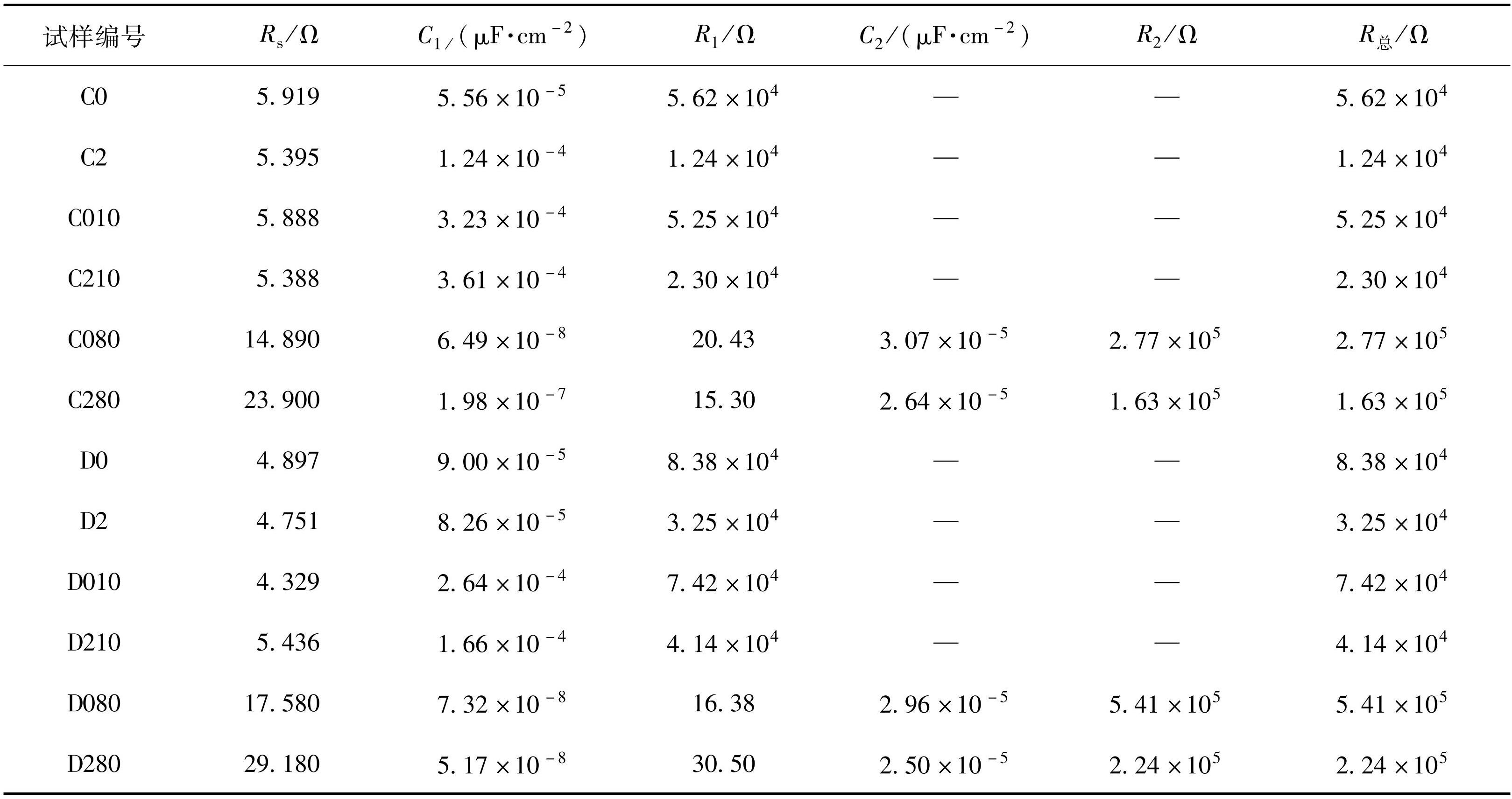
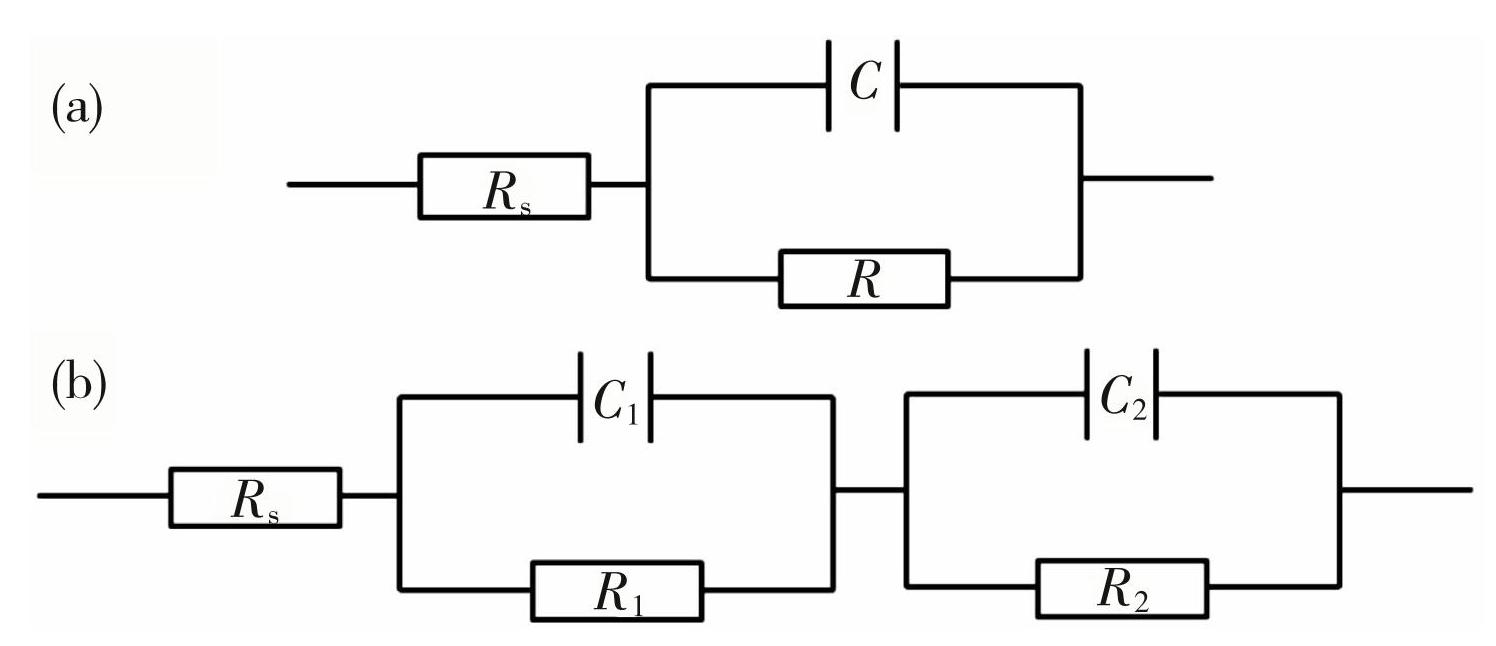
图4所示是两种不锈钢机加工和抛光样品浸泡10和80 d取出后在室温下的交流阻抗测试结果,利用等效电路图对结果进行拟合分析,并与未浸泡的样品进行对比,相应的拟合结果如表3所示。参考已有的研究结果[22-23],拟合过程中,氧化膜电路图的选取如图5所示。浸泡10 d后的样品因氧化时间较短,双层膜结构不明显,因此拟合时使用单层膜电路更合适,如图5(a)所示;未浸泡样品也是单层膜结构。而浸泡80后的样品氧化膜厚度较大,双层结构明显,拟合时使用双层膜电路,如图5(b)所示。从图5可以看出,所有样品在浸泡80 d后氧化膜的阻抗值明显高于浸泡10 d后的样品,机加工后的样品阻抗值明显低于抛光的样品,且在相同的条件下,316L不锈钢样品的阻抗明显高于304L不锈钢,阻抗越大氧化膜的耐蚀性越好,对基体的保护性也越好。随着浸泡时间的延长,样品表面形成氧化膜的耐蚀性越好。且随着氧化时间的延长,氧化膜的厚度也不断增加,内层氧化膜的厚度越来越大,其对基体的保护性也更好,耐腐蚀性能也越好;对于机加工后的样品,形成的氧化膜致密性比较差,对基体的保护性也更差[24-25]。对比未进行浸泡实验的样品,两种材料抛光样品的阻抗显著高于机加工后的样品,其原因是机加工过程对样品表面的组织结构造成了破坏,影响了钝化膜的完整性,进一步影响了材料的电化学阻抗。同时,抛光后的原始样品阻抗优于浸泡10 d后的氧化膜样品,这归因于氧化时间短,形成的氧化膜不完整或氧化膜较薄,无法有效提高样品表面的阻抗。抛光后的样品会形成钝化膜,对材料的腐蚀性能能够起到保护作用,且316L不锈钢的耐蚀性优于304L不锈钢;氧化膜的耐蚀性会随着氧化时间的延长不断增加,特别是内层氧化膜的结构会逐步完整,其保护性也会逐渐增加,但初期由于形成的氧化膜不完整,反而导致整个样品的阻抗下降。例如,抛光样品浸泡80 d后的阻抗显著高于未氧化的样品,说明随着氧化时间的延长氧化膜的保护性不断增加,可以对材料基体起到良好的保护作用。
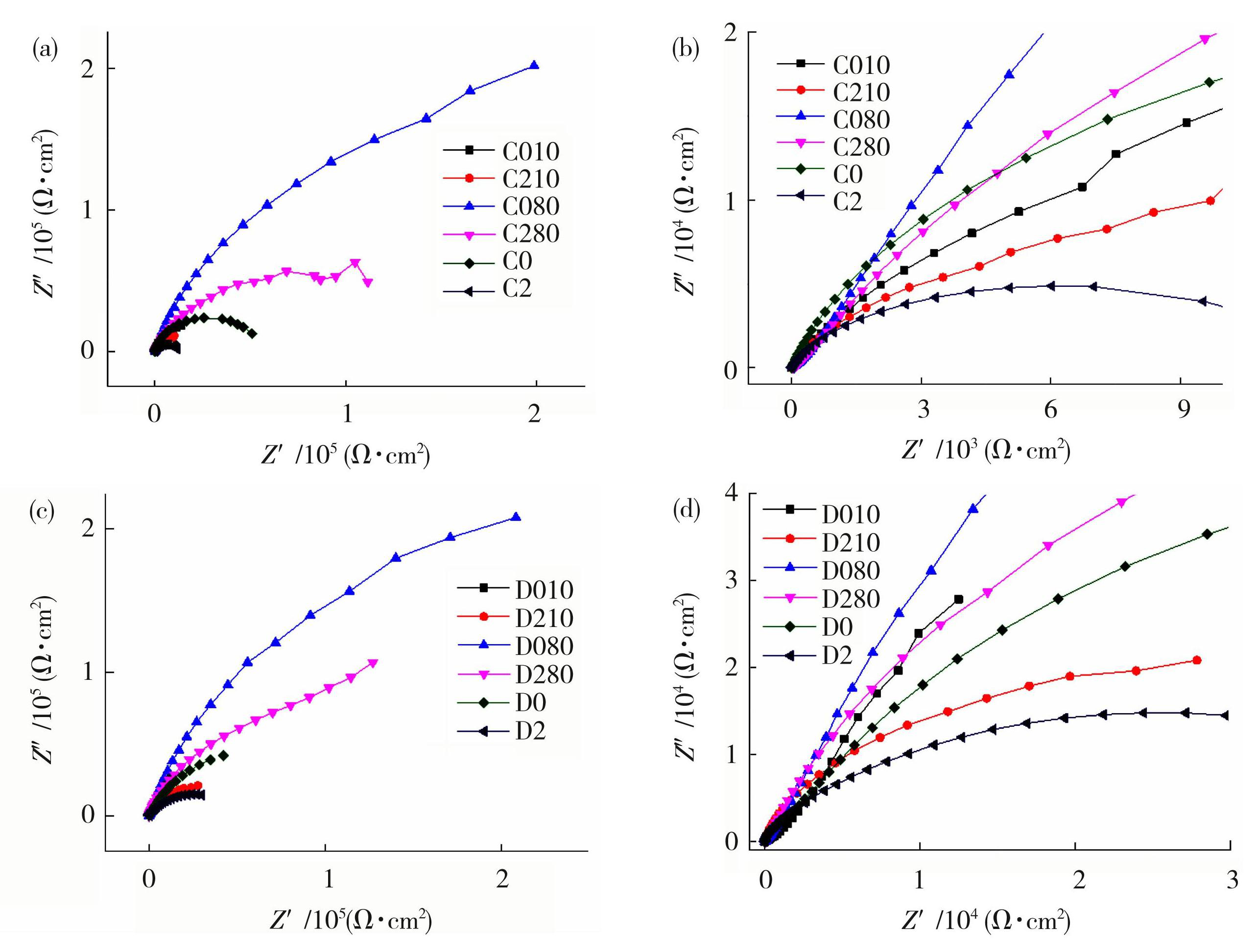
图4304L和316L两种不锈钢抛光和机加工后部分样品的交流阻抗测试结果:(a)304L;(b)图4(a)的局部放大图;(c)316L;(d)图4(c)的局部放大图
Fig.4Electrochemical impedance spectroscopy (EIS) test results of polished and machined samples of 304L and 316L SSs: (a) 304L; (b) enlarged of fig4 (c) ; (c) 316L; (d) enlarged of fig4 (c)
表3304L和316L两种不锈钢抛光和机加工后部分样品的交流阻抗测试拟合结果
Table3Fitting results of electrochemical impedance spectroscopy (EIS) for selected polished and machined samples of 304L and 316L SSs
2.2 机加工对奥氏体不锈钢高温高压水环境中应力腐蚀的影响
2.2.1 机加工对U弯样品残余应力的影响
两种不锈钢材料弯制后,样品表面部分机加工引入的残余应力得到了释放,应力水平显著降低,甚至在顶端区域由残余拉应力转为压应力。弯制前机加工后样品Y方向的应力很小,但弯制后该方向的应力大幅增加,抛光样品应力较小,3个机加工样品差距不大,均在500 MPa左右,且均为拉应力,如图6所示。
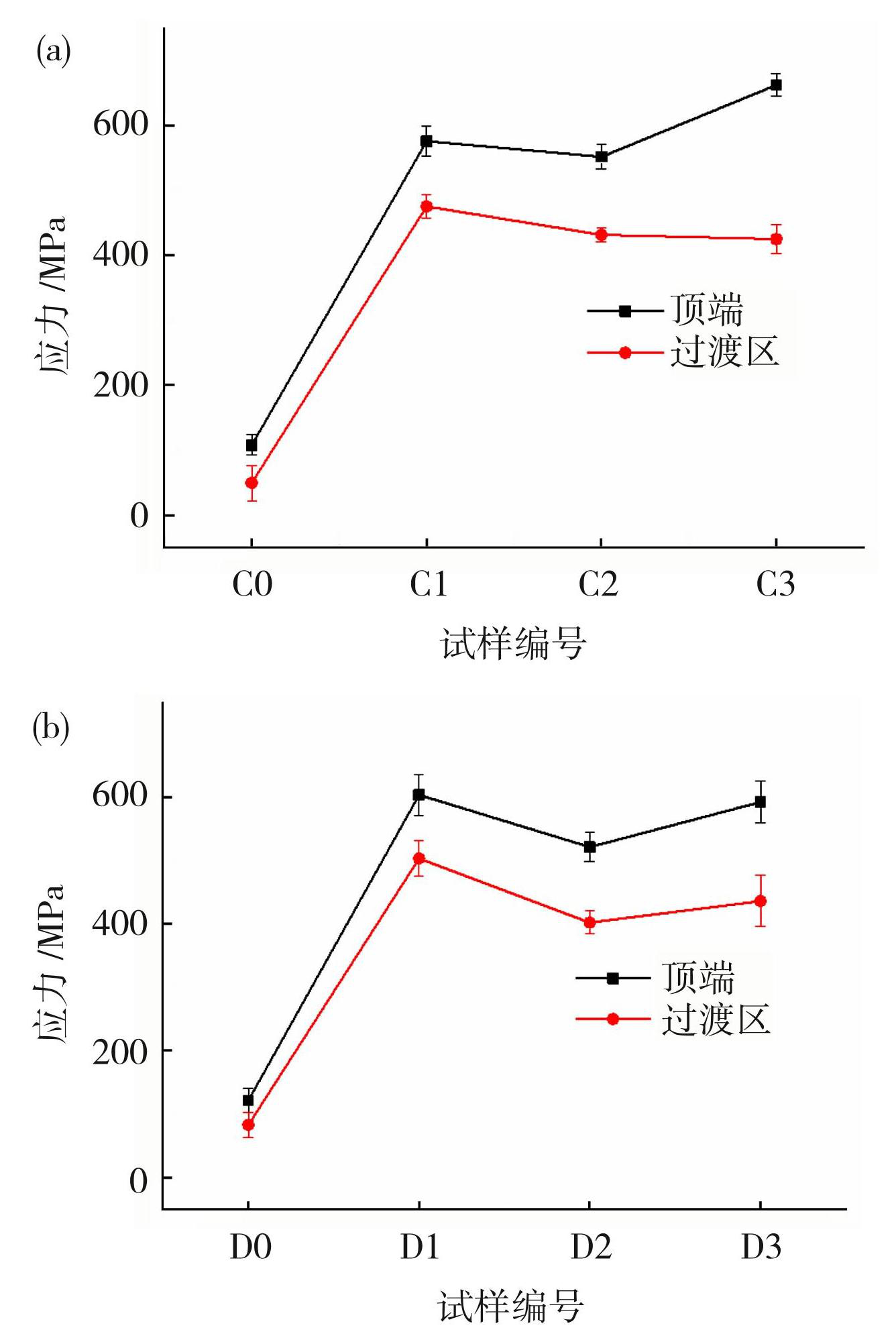
图6304L(a)和316L(b)不锈钢U弯样品Y方向的残余应力测试结果
Fig.6Residual stress (Y) test results of 304L (a) and 316L (b) SSs U-bend specimens
样品弯制完成后,用与样品相同材料的螺栓固定后放入高压釜中进行浸泡实验。需要说明的是,在本研究中由于铣刀加工的局限性,加工过程中无法调整铣削方向使加工残余应力的方向与弯制应力的方向平行,因此本研究中的拉应力主要来源于弯制过程。但对比发现,抛光样品表面产生的拉应力较小,约为100 MPa,而机加工后的样品残余应力在500 MPa左右。相同的弯制方式,但残余应力相差较大,这归因于机加工变质层的影响。如前所述,机加工后样品的外表面为变质层,变质层的变形能力很差,弯制后相应的残余应力也就很高。
2.2.2 机加工对U弯样品应力腐蚀开裂的影响
浸泡实验在高温高压釜中进行,其中一组为300℃的硼酸氢氧化锂溶液,另外一组加入了500 mg/L的氯离子。两组U弯型样品经过100 d浸泡后,样品表面已无金属光泽,呈深褐色。两组样品在清洗干净后宏观形貌无明显区别,但观察浸泡后的溶液发现,加入氯离子的一组样品中溶液中有大量的铁锈,溶液呈红褐色,而未加氯离子的一组溶液与实验前无明显区别,说明氯离子能够明显地促进304L和316L不锈钢的腐蚀行为。在所有实验环境下,表面抛光的样品均未萌生应力腐蚀裂纹。
2.2.2.1 高温高压水环境
图7所示是机加工后样品在不含氯离子的溶液中浸泡365 d后样品外表面萌生的裂纹形貌,所有C0~C3和D0~D3的8个样品中,仅有C1和C3两个样品中有应力腐蚀裂纹萌生,其余样品未发现裂纹。两个样品萌生的裂纹长度仅有几微米,裂纹萌生在变质层区域,裂纹的扩展速率约为0.008 3 μm/d。高温高压水不含氯离子环境的一组样品浸泡100 d后外表面无裂纹萌生。
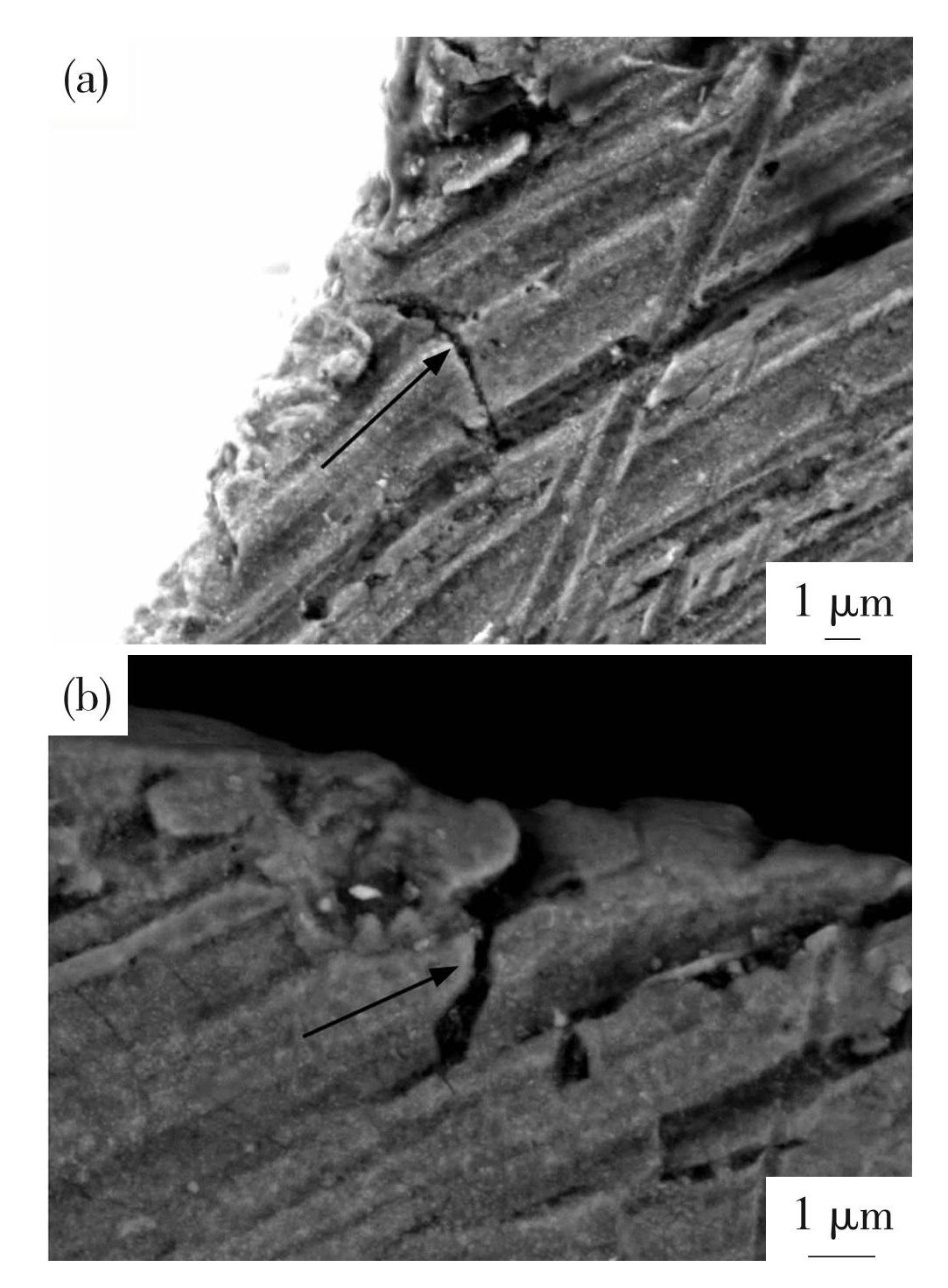
图7304L不锈钢机加工U弯样品在300℃水环境下365 d后的应力腐蚀裂纹形貌
Fig.7Stress corrosion cracking morphology of 304L SS machined U-bend specimens after 365 days in 300℃ water environment: (a) C1; (b) C3
2.2.2.2 高温高压含氯离子水环境
图8所示是两种不锈钢样品在含500 mg/L氯离子的300℃高温高压水溶液中浸泡100 d后的形貌,可以看到裂纹均萌生在外表面。其中图8(a)和(d)分别是304L和316L不锈钢抛光后的样品,样品的外表面无明显变化;图8(b)、(c)、(e)、(f)为机加工后的样品,可以看出样品外表面几微米的范围内有小裂纹萌生,这些裂纹萌生均在机加工变质层区域。经计算可知,裂纹的平均扩展速率约为0.09 μm/d。
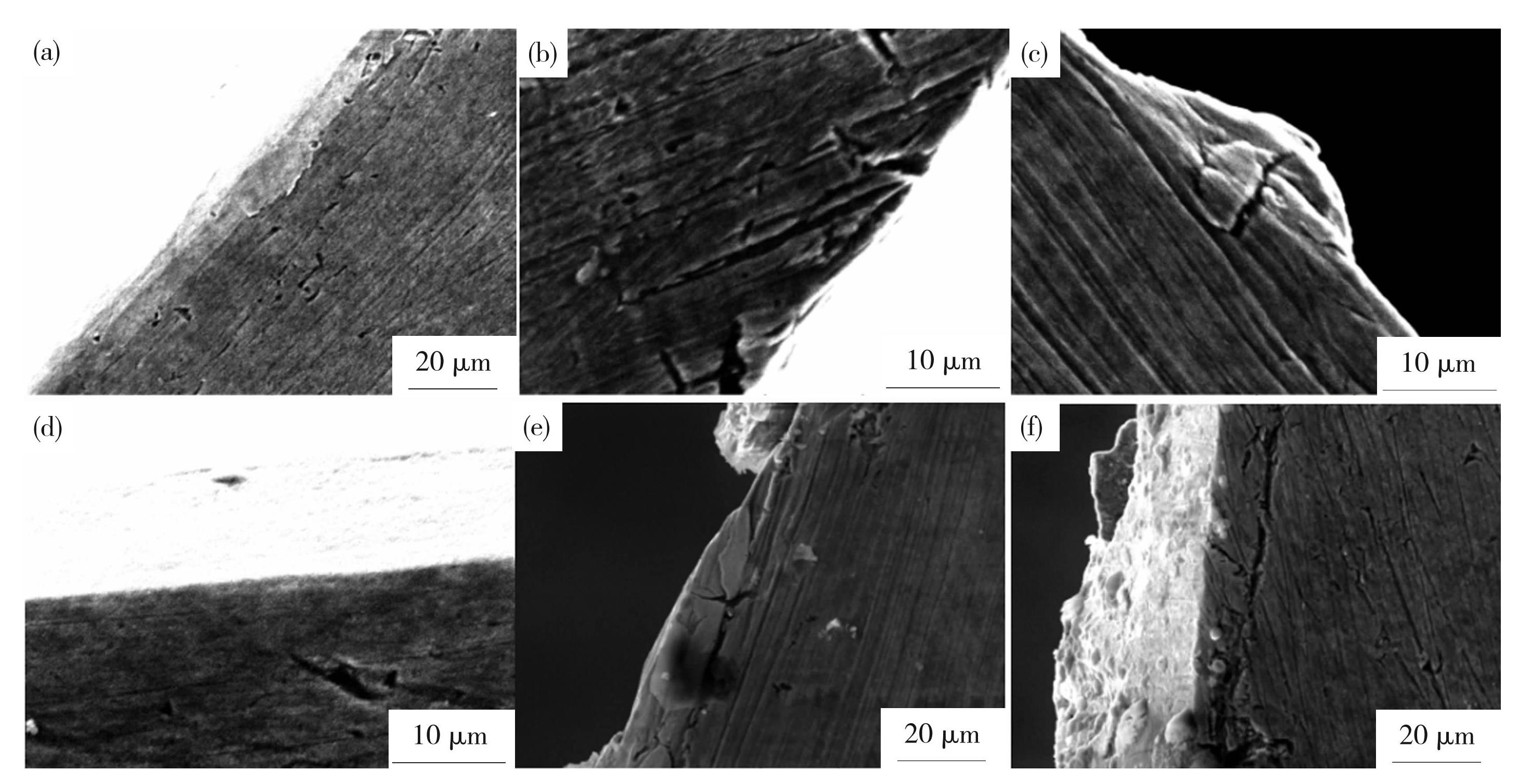
图8304L和316L不锈钢机加工U弯样品在含500 mg/L氯离子的300℃水环境下腐蚀100 d 后的形貌
Fig.8Morphology of 304L and 316L SSs machined U-bend specimens after 100 days in 300℃ water environment containing 500 mg/L chloride ions: (a, b, c) 304L; (d, e, f) 316L
图9所示是两种不锈钢机加工后样品在含500 mg/L氯离子溶液中浸泡365 d后外表面萌生裂纹的形貌,可以看出,所有样品均萌生应力腐蚀裂纹,最长达35 μm,D2样品的一个区域萌生了一簇裂纹,如图9(e)所示。去除前100 d的裂纹长度后,后265 d裂纹的平均扩展速率约为0.127 μm/d,约为不加氯离子的15倍。抛光样品未萌生裂纹,外表无明显变化。与未含氯离子的实验结果对比,氯离子显著促进了应力腐蚀裂纹的萌生。将部分样品镶嵌、打磨、侵蚀后在体视显微镜下观察发现,部分小裂纹已经在打磨的过程中消失,仅有少量裂纹仍然存在,如图10所示。
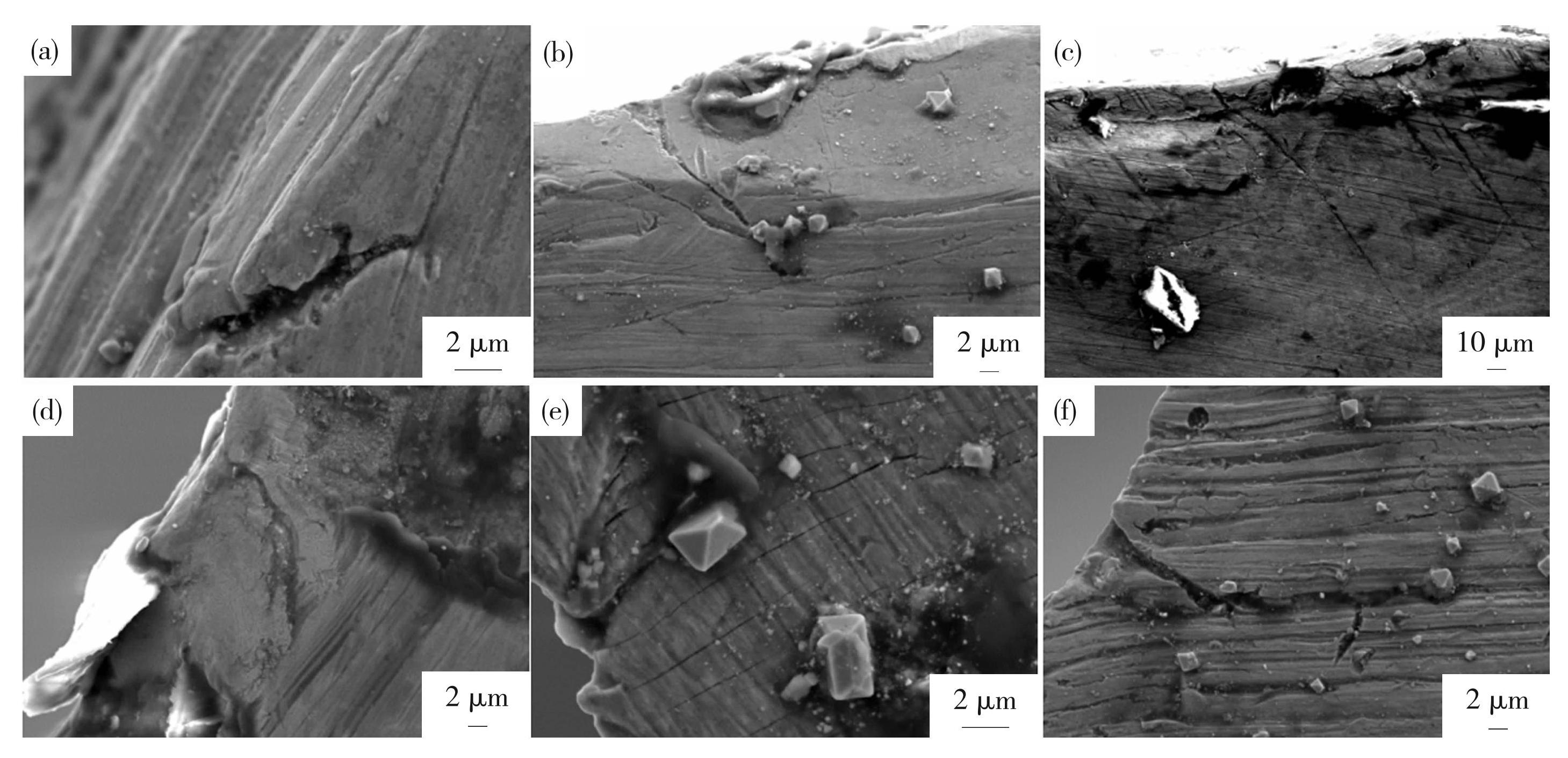
图9304L和316L不锈钢机加工U弯样品在含500 mg/L氯离子的300℃水环境下365 d后的裂纹形貌
Fig.9Stress corrosion cracking morphology of 304L and 316L SSs machined U-bend specimens after 365 days in 300℃ water environment containing 500 mg/L chloride ions: (a, b, c) 304L; (d, e, f) 316L
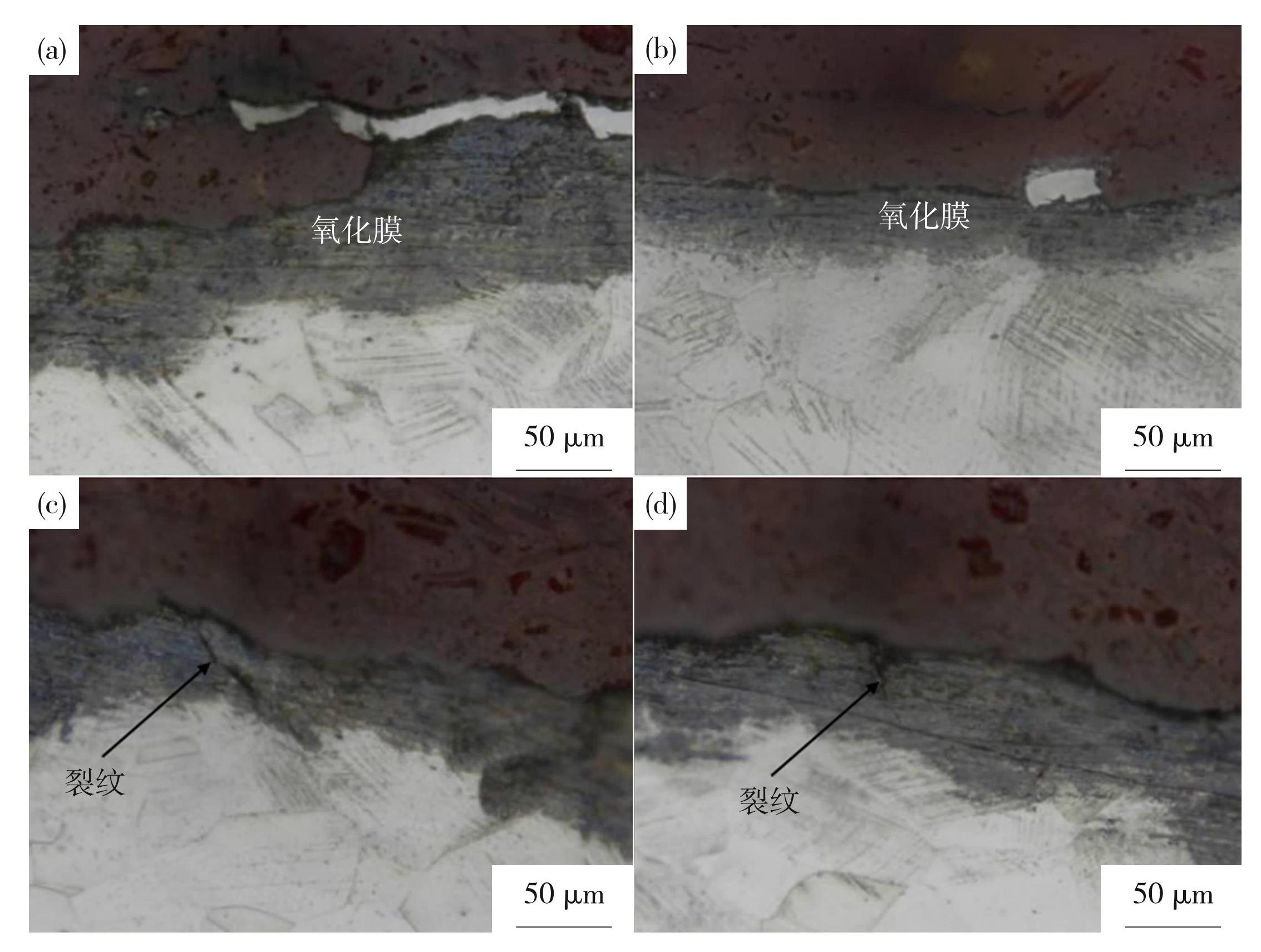
图10304L和316L不锈钢机加工U弯样品在含500 mg/L氯离子的300℃水中365 d后横截面的形貌
Fig.10Cracking morphology in cross-section of 304L and 316L SSs machined U-bend specimens after 365 days in 300℃ water environment containing 500 mg/L chloride ions: (a, c) 304L; (b, d) 316L
综上实验结果可知,表面机加工对两种不锈钢的应力腐蚀开裂有显著的影响:即使在添加氯离子的情况下,表面抛光样品腐蚀365 d后也不会萌生应力腐蚀裂纹;但表面加工后的样品无论是否添加氯离子,100 d内部分样品开始萌生应力腐蚀裂纹,可以认为是机加工显著促进了304L和316L不锈钢在高温高压水环境下的应力腐蚀开裂。表面机加工后一方面影响了U弯过程中的残余应力,使样品表面的残余应力增加至400 MPa以上,进入应力腐蚀敏感性区间[19];抛光样品表面的残余应力水平通常在50 MPa左右,不会引起应力腐蚀开裂。另一方面,机加工破坏了不锈钢材料表面的晶体结构,形成大量的位错、滑移带甚至微裂纹等缺陷,这些缺陷会在氧化的过程中保留在氧化膜中,导致形成的氧化膜中存在缺陷,保护性较差,进一步促进应力腐蚀开裂的发生[26-27]。Ti等[28]在研究304L和316L不锈钢表面机加工后在300℃高温高压水环境下的氧化膜结构时发现,表面铣削加工样品的氧化膜致密性显著低于机械抛光后的样品,特别是内层氧化膜,氧化膜的电化学腐蚀性能也显著低于抛光后的样品,而氧化膜的质量对应力腐蚀敏感性有显著影响。Wu等[29]用慢应变速率拉伸法研究表面机加工后304L和316L不锈钢的应力腐蚀敏感性时发现,机加工后材料的应力腐蚀敏感性增加2~3倍,观察断口发现,变质层处的纳米晶层呈现出沿晶的断裂特征,且样品表面在拉伸过程中容易萌生裂纹,呈现出显著的应力腐蚀敏感性增加倾向。因此,在残余应力和表面变质层的共同作用下,表面机加工后不管是否有氯离子存在,在300℃的高温高压水环境下腐蚀100 d内部分样品开始萌生应力腐蚀裂纹。
氯离子对应力腐蚀开裂的影响非常明显,本研究中仅添加500 mg/L的氯离子就能使应力腐蚀裂纹的扩展速度增加10~15倍。核电站中的关键部件区域会严格控制氯离子的存在范围,但由氯离子引起的应力腐蚀开裂时有发生。Xie等[30]总结了近几十年以来的关于核电站中由氯离子引起的应力腐蚀不锈钢材料焊缝的案例和研究结果发现,在残余应力存在的情况下,核电厂的众多材料部件中,在一定的残余应力水平、环境湿度和温度的条件下氯离子可极大地促进应力腐蚀开裂的裂纹萌生和裂纹扩展。相似地,不锈钢、镍基合金和低合金钢的疲劳实验过程中,氯离子的存在均会加速裂纹的萌生和扩展。
3 结论
1)随着在300℃高温高压水环境中氧化时间的延长,304L和316L不锈钢样品表面的氧化物颗粒不断增加,浸泡80 d后,氧化膜厚度可达到微米级。
2)电化学研究结果表明,随着浸泡时间的延长,304L和316L不锈钢抛光样品和机加工样品表面氧化膜的耐蚀性均有所增强,但机加工样品的氧化膜耐蚀性劣于抛光样品。
3)在300℃高温高压水环境下浸泡365 d后,仅304L不锈钢的部分机加工样品萌生应力腐蚀裂纹;添加500 mg/L氯离子的溶液中浸泡100 d后两种不锈钢均开始在机加工变质层处萌生裂纹,浸泡365 d后,萌生的应力腐蚀裂纹数量和长度均显著增加。无论添加氯离子与否,365 d实验后所有抛光后的样品均未萌生应力腐蚀裂纹。
4)表面机加工显著促进了304L和316L不锈钢应力腐蚀开裂的发生,一方面其增加了材料表面的残余应力水平,另一方面其破坏了样品表面的微观结构,导致形成的氧化膜的保护性降低。氯离子对应力腐蚀开裂的裂纹萌生和扩展均有显著的促进作用,在含有500 mg/L氯离子的300℃高温高压水环境下裂纹扩展速率增加约15倍。
