Abstract
Prefabricated concrete has recently been developed and widely used in off-site construction. Research on the automation of precast concrete component production and quality inspection has also gradually increased. However,there is a relative lack of literature on the effective sorting and analysis of precast component transportation automation.Therefore,this paper systematically reviews and comprehensively analyzes 56 articles published from 2013 to September2024. A three-step research method,including bibliometric retrieval,quantitative analysis,and qualitative analysis,is used to identify and summarize three key research topics:vehicle transportation scheduling,component allocation and stacking,and monitoring and identification. Finally,this paper clarifies the limitations of the current published research to predict future research trends precisely.
0 Introduction
1)Background and significance. In recent years,prefabricated buildings have been widely adopted and investigated in the fields of architecture,engineering,construction,and science around the world due to their efficient construction operations,reduced labor requirements,and improved construction quality.Considering the obvious advantages of prefabricated buildings,such as greatly reducing workers' on-site working time and reducing carbon emissions and resource waste during construction,China is currently vigorously promoting the prefabrication of buildings[1-2]. Prefabricated buildings have been used in many public infrastructure projects,and their construction methods have also been adopted in many new residential buildings.
Prefabricated construction is a type of off-site construction that involves transferring part of the on-site production component work to prefabrication factories and then transporting the components to the construction site for installation and assembly. This method has become an effective solution to the problems of low productivity and labor shortage in on-site construction and has been widely adopted.Meanwhile,prefabricated buildings have changed the traditional concept of cargo transportation. On the one hand,prefabricated concrete(PC)components are heavy,large,fragile,and inconsistent in shape,making them difficult to transport by traditional vehicles. On the other hand,traditional vehicles that are not suitable for transporting PC components are prone to emptying,increasing transportation costs and carbon emissions and creating difficulties for the transportation and development of prefabricated buildings.
The materialization stages of prefabricated buildings include material production,material transportation,component production,component transportation,and construction[3-4]. So far,research on automation in prefabricated construction has focused mainly on prefabricated component production and on-site construction technologies,while the transportation of prefabricated components remains relatively underexplored. Although the raw materials used in prefabricated buildings are similar to those of traditional building materials,the prefabricated components differ significantly in size,shape,and vulnerability. Therefore,the existing material transportation system and quality management methods cannot fully address the specific logistics challenges in component transportation. Accordingly,in response to the transportation issue of PC components,researchers have conducted the following relevant studies.
The transportation scheduling problem of PC components has become a hot research issue in recent years. However,the current scheduling schemes for prefabricated components mainly rely on the experience of managers,which lacks a scientific and efficient management model. When there are many prefabricated construction sites or high demand for prefabricated components,it is difficult to ensure the timely delivery of prefabricated components and to effectively control transportation costs[5]. Although there are comprehensive review papers on the automation of PC component production[6-8],there is currently a lack of systematic reviews specifically focusing on the transportation stage.
At present,optimization algorithms for improving transportation efficiency can be divided into two categories:exact and heuristic algorithms. The heuristic algorithm is usually problem-oriented.Ng et al.[9] mainly studied vehicle path planning for component transportation and proposed a multiple bee colony algorithm for vehicle transportation paths and a path selection strategy for handling vehicle traffic congestion,thereby reducing the risk of component transportation delays. Hojabri et al.[10]studied the problem of coordinating vehicle transportation of components and construction operations,combining large neighborhood search with the constraint propagation capability of constraint programming,and then proposed an adaptive large neighborhood search method based on constraint programming. Liu et al.[11]used a two-stage heuristic algorithm to obtain the optimal transportation route with the minimum transportation cost based on the principle of matching special-shaped PC components with traditional vehicles.
Meanwhile,some scholars have studied optimization methods for transportation scheduling based on a whole-process management system for production-transportation-construction. Zhang[12]developed an automated component delivery management system to determine the best supplier combination and delivery strategy,which can effectively combine on-site scheduling and delivery planning strategies to reduce planning uncertainty. Dan and Liu[13]proposed an integrated scheduling optimization model for production and transportation in a prefabricated component flow shop with a delivery time window,which describes the relationship between production and transportation and addresses transportation constraints while balancing delivery timeliness and transportation economy. Luo et al.[14]integrated construction feasibility information(such as logistics,assembly,and installation requirements)into the architectural design process of off-site construction projects supported by building information modeling(BIM). Ismail[15]analyzed the current status of construction supply chain management in PC building construction,explored hybrid intelligent vehicle tools and technologies used in such management,and reduced construction supply chain risks from a transportation management perspective. It ultimately alleviated the pressure of planning PC building construction. Jang et al.[16]proposed a cloud computing-based information system based on the analysis of the PC transportation component planning process to solve the problem of a lack of system management in PC logistics,to achieve more efficient automated PC transportation planning.
Problems related to hoisting component transportation are inevitable during the on-site assembly process,and automation technology can be further used to optimize transportation problems. On the one hand,component hoisting can improve transportation efficiency by establishing relevant models or using optimization algorithms. Zhao et al.[17]established an innovative hoisting management system framework based on digital twin(DT),integrated BIM,and the internet of things(IoT)to establish a digital twin model(DTm)for PC hoisting control and to carry out route planning of hoisting components.Yin et al.[18]studied the dynamic and uncertainty problems of prefabricated building projects that are often overlooked in the hoisting scheduling process.They used genetic programming(GP)to automatically generate scheduling rules to reduce the complexity of dynamic scheduling for tower cranes in prefabricated buildings. Khayam et al.[19]focused on the damage and impact problems during the hoisting and transportation of PC components. They proposed a multimetric,portable sensing system that simultaneously measures strain and acceleration and adjusts the safety assessment strategy for the offset of the initial strain measurement,enabling automatic evaluation of the safety of PC components during delivery.
On the other hand,the stacking planning of PC components is also affected by key hoisting factors.Automation technology can also be used to optimize on-site transportation and stacking. Fang et al.[20]studied the automation of the cast-in hoist ring(CHR)for identifying and locating PC components.It used a spatial clustering algorithm to extract the group identification area of the CHR and determined the position of the CHR using pattern recognition.Lee et al.[21]analyzed the different factors affecting the stacking problem of PC components during transportation,normalized the process of PC component stacking,and found that the normalization result generated by automation has good stability and low fault tolerance. Zou et al.[22]considered that the current PC component stacking scheme lacks consideration of the assembly sequence,which often causes the prefabricated components to be sorted twice for hoisting,a storage-location allocation model and learning strategy are proposed to reduce the workload of secondary adjustment and improve the stacking stability of PC components.
In addition,to effectively optimize transportation planning,PC component transportation automation will integrate with overall transportation planning to control transportation costs and reduce carbon emissions. Related research has gradually increased in recent years.
2)Research objectives and paper organization.Understanding the current status and gaps in the research field of PC components can be quickly achieved through a systematic literature review.Although prefabricated buildings have attracted the attention of many scholars in recent years,and the number of related articles has gradually increased,the current literature review focuses more on automation research in the production and quality inspection of PC components[6-8]. However,research on the application of automation technology in the transportation stage of PC components has not been systematically organized or summarized.
Therefore,this study reviews the literature on the development of PC component transportation over the past few years. It summarizes the research topics,the characteristics of each research method,and the differences with actual needs,and combines quantitative analysis of the literature with qualitative discussion to illustrate the current research progress and future development trends of PC component transportation automation research.
As shown in Fig. 1,this research method refers to the review steps of the relevant systematic literature review[23-24],and a comprehensive overview of each stage is given. This paper first discusses the significance of this study in the introduction. The second stage conducts bibliometric retrieval. The third stage uses CiteSpace to conduct scientometric analysis to reveal the structural relationships and development processes among the various research parts. Then,a statistical overview of the research status of the knowledge in this research field is completed(2013-2024.09). The fourth stage is a systematic literature review. Scientific mapping clustering results from scientometric analysis are used to analyze each topic and summarize the research topics and methods in the field of PC component transportation stage automation,showing the latest research progress and future directions of PC component transportation automation.
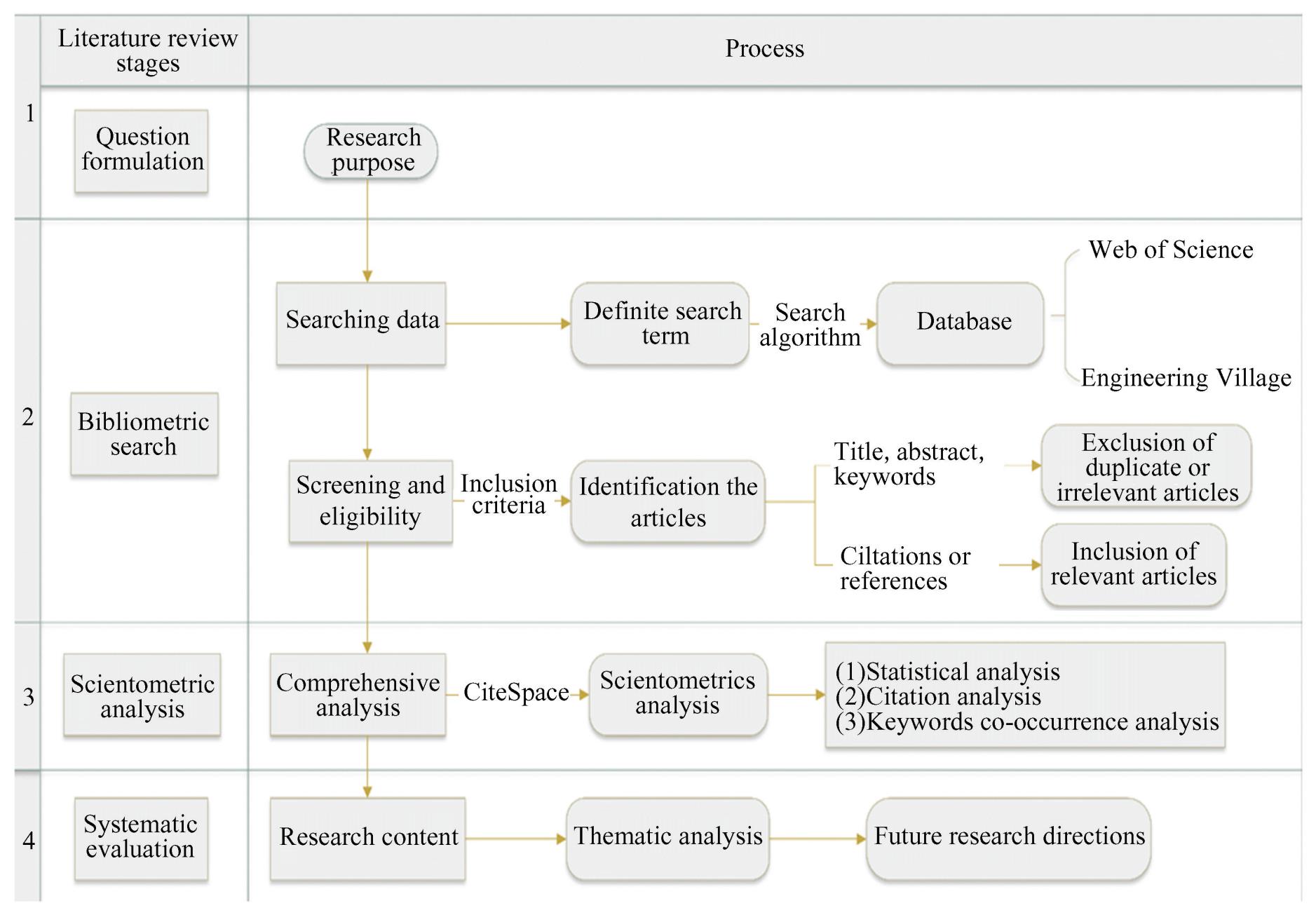
Fig.
1
Research framework
1 Methodology
This study explores the current status of the application of automation technology in the production process of prefabricated components over the past decade,adopts a systematic literature review research method to reduce systematic bias,and ensures the research quality is not affected by a priori assumptions. In this study,scientometric analysis is used as a quantitative standard,and systematic evaluation is used as a qualitative standard.
The systematic literature review method is a clear scientific method. The PRISMA 2020 literature review protocol,proposed by Page et al.[25]in the medical field,includes a 27-item checklist and a flowchart,intended to facilitate transparent,complete,and accurate reporting of systematic reviews. This PRISMA describes the process and basic principles for identifying,selecting,including,and excluding literature to improve the accuracy of systematic review reports,reduce the risk of errors,and achieve reliability through systematic analysis. This study refers to the PRISMA research method,conducting literature identification,screening,and eligibility assessment in stages,and determining the literature included in the quantitative and qualitative analyses.The specific process is shown in Fig. 2.
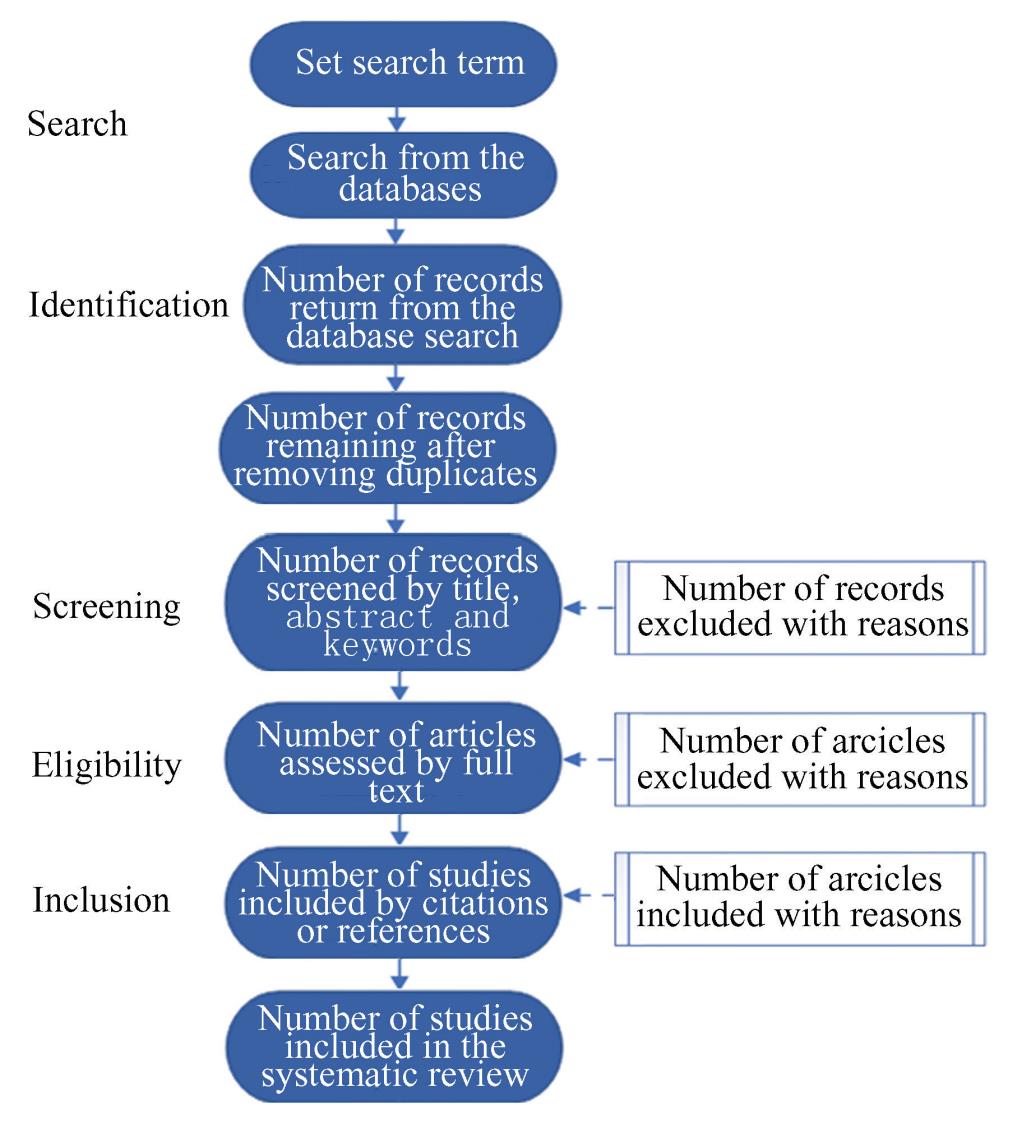
Fig.
2
PRISMA process for the selection of the documents
1.1 Data Source
Literature database retrieval is used to improve the accuracy of literature retrieval. Based on the backward search,manual searches and other methods are also used to further retrieve relevant literature.
A suitable literature database can help to find relevant literature. To clarify the source of the database,two literature databases were selected for retrieval:Web of Science(WOS)and Engineering Village(EV). The selected database is a comprehensive academic literature index database with relatively extensive coverage,which includes most academic journals,conference papers,and other documents. Besides,both search engines can use Boolean syntax to set conditions for more accurate retrieval. This study combines the two search engines,making the collected literature more comprehensive and more credible,which can ensure the scientificity and reliability of the literature review.
1.2 Inclusion Criteria
The literature included in the research scope is required to meet the specified inclusion criteria.
1)The publication language is limited to English to ensure the quality of the literature and improve retrieval efficiency,as the vast majority of high-impact academic journals and conference proceedings are published in English.
2)For journal articles and conference proceedings,only journal articles in the final publication stage can be screened,ensuring that all candidate records have been peer-reviewed.
3)Literature published from 2013 to September2024 is used to capture the latest research trends and technological advancements in this field.
4)Literature in irrelevant research fields,such as psychology,education,chemistry,etc.,is excluded when selected.
1.3 Search
This study follows the search rules of WOS and EV,respectively,and selects appropriate search terms according to the correct structure. The search strings used are mainly set to four parts,and the AND operator is used to connect each part. The search strings are as follows:1)Research object:PC components,respectively searched by production method and components. 2)Research stage:the transportation stage. 3)Automation technology related to the transportation stage. 4)Refined conditions for the search scope.
To cover the research content as much as possible,the algorithm search terms used by the search engines WOS and EV in this study are as follows.
The purpose of setting search terms is to ensure that most words can be retrieved with synonymous expressions,to accurately retrieve the required documents,and to reduce the number of related documents added in subsequent reading. The fourth part refines the search scope in accordance with the inclusion criteria described in Section 1.2. In general,by specifying search terms,many documents unrelated to the research topic can be effectively excluded,thereby further reducing the number of records during the review,improving screening efficiency,and ensuring the validity of the search results.
1.4 Screening Review
The literature search results may still contain some literature that is not related to the research topic,even after setting the search terms and inclusion criteria. To ensure that the final sample literature is highly relevant to the research question,in addition to the first screening,manual screening is required:setting literature screening criteria and eliminating materials that fail to meet them. At this stage,two researchers conducted a complete screening procedure.The two researchers independently judged whether the literature fell within the research scope,and then took the intersection of their judgments as the final result,namely the double-blind review method. This method was used for screening,eliminating potential biases and subjective factors in the judgment process,and improving the accuracy and reliability of the judgment results.
The screening stage is mainly divided into three stages.
1)Identification stage. According to the inclusion criteria,the WOS and EV data source retrieval libraries were searched,and the paper's title,keywords,abstract,and other information were exported. The two sets of data were merged into the same group in Excel,and the titles of the exported documents were deduplicated to obtain a list of documents to be screened.
2)Screening stage. At this stage,the two researchers read and evaluated the list of literature to be screened,mainly including the paper's title,abstract,and keywords,and classified the evaluation results using a scoring system:0(outside the research scope),0.5(uncertain item),1(within the research scope). The two researchers screened out papers beyond the research scope based on the above evaluation results. The main criterion for judgment is whether the literature focuses on the research of the transportation stage of PC components. Irrelevant articles were screened out.
3)Eligibility. After screening,the literature classified as 0 was screened out,and the list of literature classified as 0.5 and 1 was retained. The full texts of the retained literature were downloaded and read by the two researchers independently. Afterward,they merged their evaluation results and discussed the controversial literature. Literature without a full text or literature focusing on automation research in the non-PC component transportation stage was excluded from the research scope. While reading the literature,backward search and forward search methods were used to add references or citations to the selected literature,and articles pertinent to the theme but not retrieved were included in the full-text review scope.
After three stages of complete screening and review,the final list of literature was obtained.Quantitative analysis and systematic evaluation were carried out based on the final list.
1.5 Risk of Selective Bias
Different inclusion and exclusion criteria may lead to the selective inclusion or exclusion of certain studies,which may help focus on the topic and improve the quality of the literature but may affect the representativeness of the results. There are potential bias risks in selecting literature databases and in setting inclusion criteria when searching.
First,the WOS and EV databases were used,and the inclusion criteria were set as English-published literature. Due to this limitation,some literature that may be related to the research topic has not been retrieved,such as articles published in Chinese. However,since the contributors of the Chinese literature are largely the same as those of the English literature cited in this paper,both the Chinese and English literature reflect the same research status and development. Therefore,there is no significant selection bias.
Secondly,the publication year is set to 2013 or later,and the literature type is limited to journal articles and conference proceedings,which can help focus on the latest research trends. High-quality,representative literature helps ensure the quality of subsequent research results.
In addition,although the search terms are set to take into account the keywords that appear in the PC component transportation as much as possible,there may still be literature related to the research topic that has not been retrieved for other reasons. Although setting search terms may increase the risk of bias,it can effectively improve the efficiency of the screening and review process and exclude a large number of irrelevant literature from the scope of this study.
Therefore,to reduce the risk of selective bias during screening and review,a double-blind interpretation method is adopted,with two researchers independently interpreting the articles. This avoids the selective bias caused by subjective factors of a single interpreter,improves the quality of interpretation,and ensures the reliability of the final literature list,thereby reducing the risk of selective bias to some extent.
2 Results
After completing the collection and selection of literature materials,the collected data were subjected to a descriptive scientometric analysis. Scientometric analysis methods primarily include statistical methods and visualization techniques. The scientometric analysis of the literature is mainly divided into two parts:the first is the external feature analysis,which explains the development status of regions,research institutions,and researchers,including the analysis of the growth trend of publication volume,influence analysis,regional distribution,and journal analysis.The content analysis shows the relevance of each study through a combination of text mining and visualization,including keyword co-occurrence analysis,cluster analysis,and timeline chart. In this section,Excel was first used to manage and organize literature data,which involved deduplication,screening,and review. Then,based on CiteSpace,the final research literature catalog was quantitatively analyzed,and scientometric methods were used to analyze the individuals involved in the research on automation theory or technology. Then according to the keyword co-occurrence clustering situation,the topic of the literature is classified,the research status was explained,and the results were displayed visually.
2.1 Search Results
Using the research method described in Section 1,Boolean operations were used to search for keywords,as shown in Table 1. The first search provided 210 WoS documents and 101 EV documents.Then,the documents were selected using the established screening criteria to obtain the final list of56 documents. The specific process is shown in Fig. 3. Next,a quantitative analysis will be conducted using the sorted bibliography,and key research topics over recent years were obtained based on the distribution of documents.
Table
1
The search terms
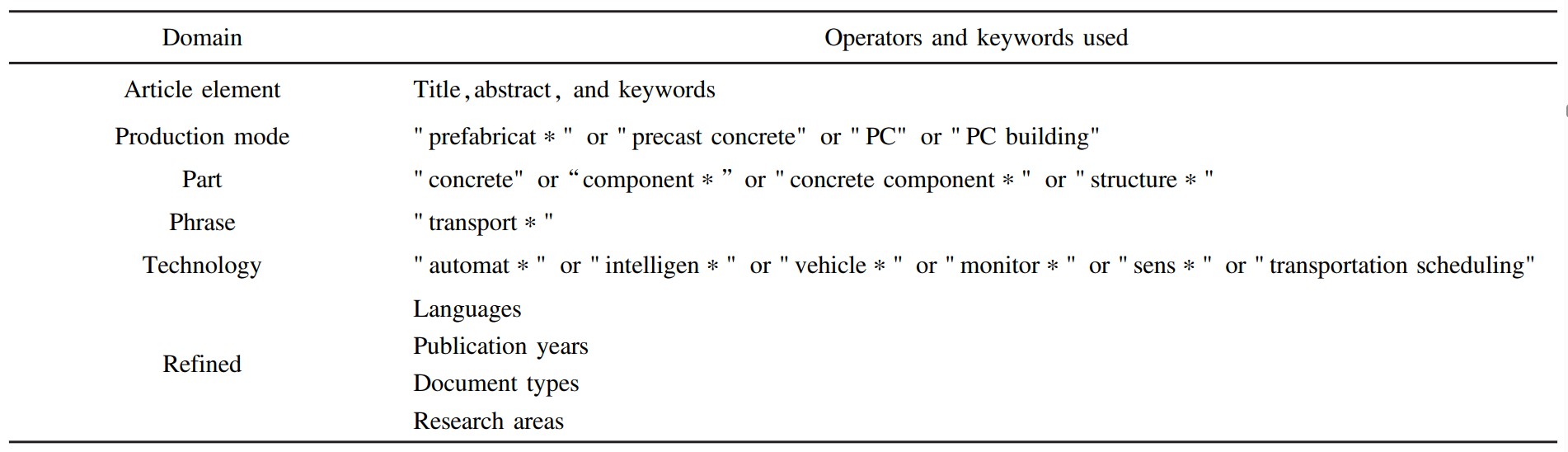
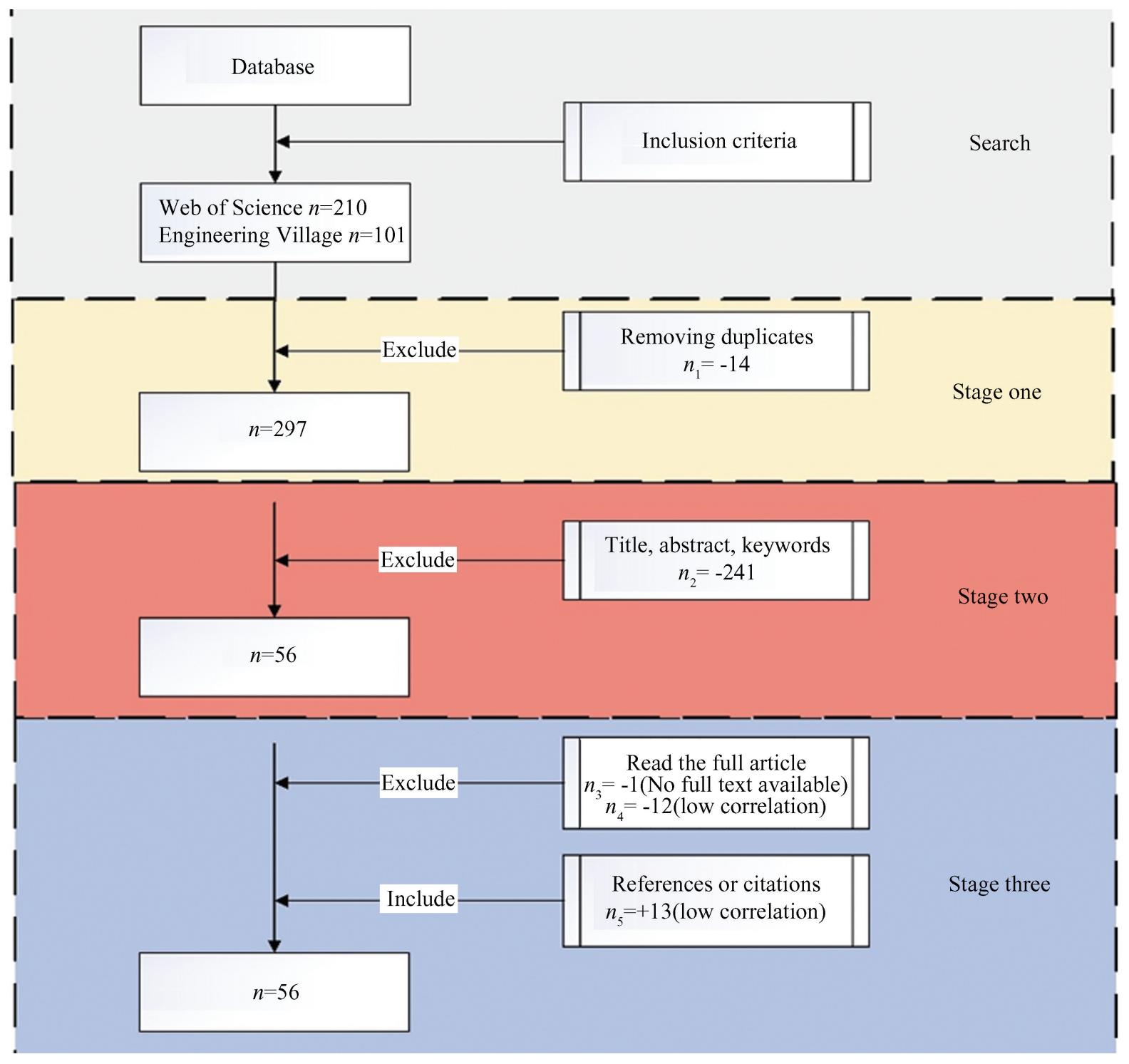
Fig.
3
Specific search process flow chart
2.2 Characteristics of Database
The selected documents were published from 2013 to September 2024,focusing on research topics and development trends in recent years. Fig. 4 shows a graph of the number of publications by publication year. The results show that there were few relevant studies in this field in the past,and it began to increase significantly in 2020. Nearly 82%(46articles)of the selected documents were published in the past five years from 2020 to 2024. Research on this topic has increased significantly,indicating that the academic community has become more and more interested in it over the past five years.
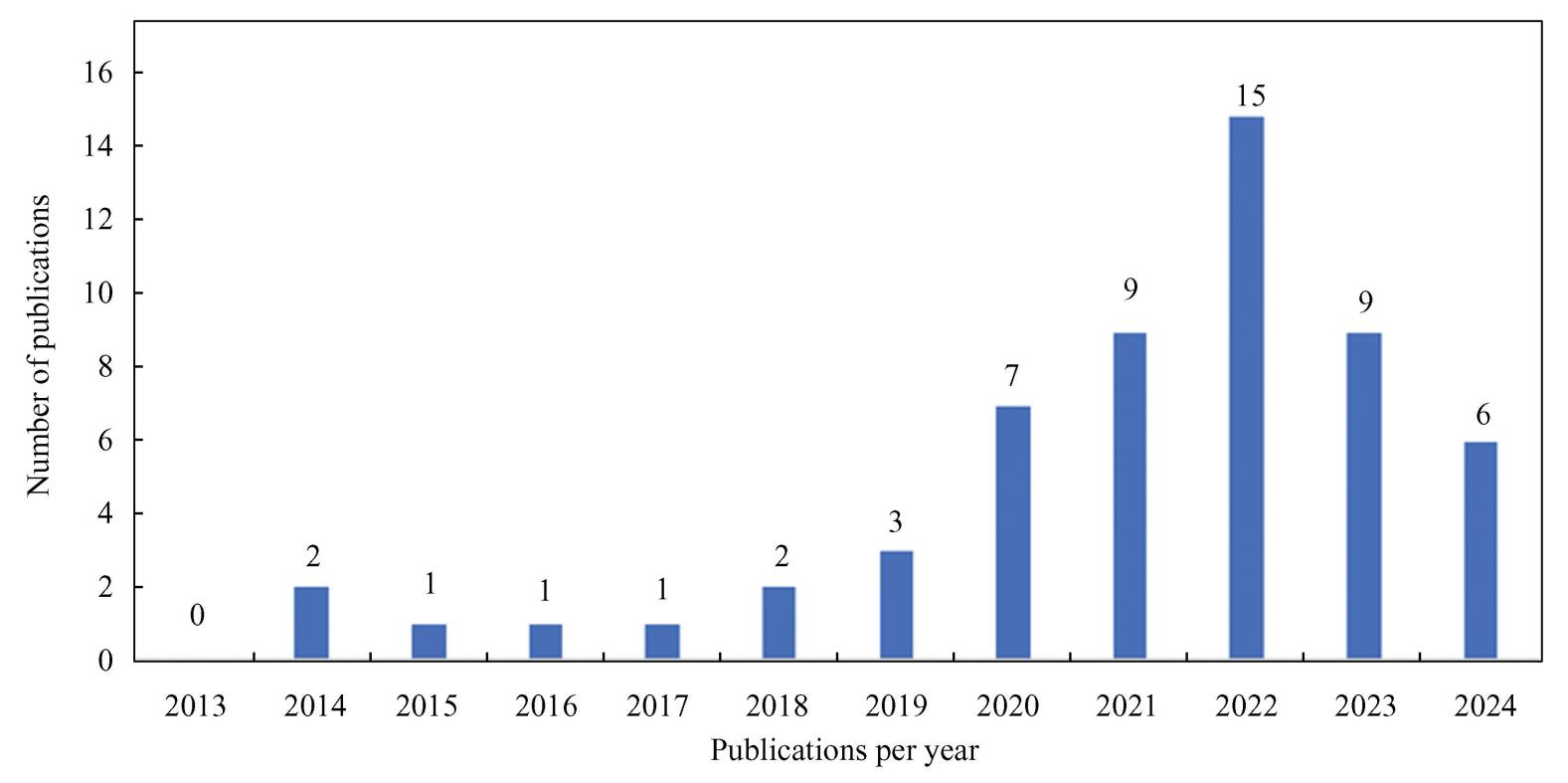
Fig.
4
Number of articles per year(2013-2024.09)
Fig.5 illustrates the research contributions of various countries in this direction. Among the 56papers,42 articles contain Chinese authors,accounting for nearly 58% of the publications,and the number of articles containing Korean authors accounts for nearly 11%. The authors of the remaining published papers are mainly distributed in Canada,the United States,Australia,and the United Kingdom. It is not difficult to see that the research on this topic is mainly located in China and South Korea,which may be related to national policy support and the construction market[26].
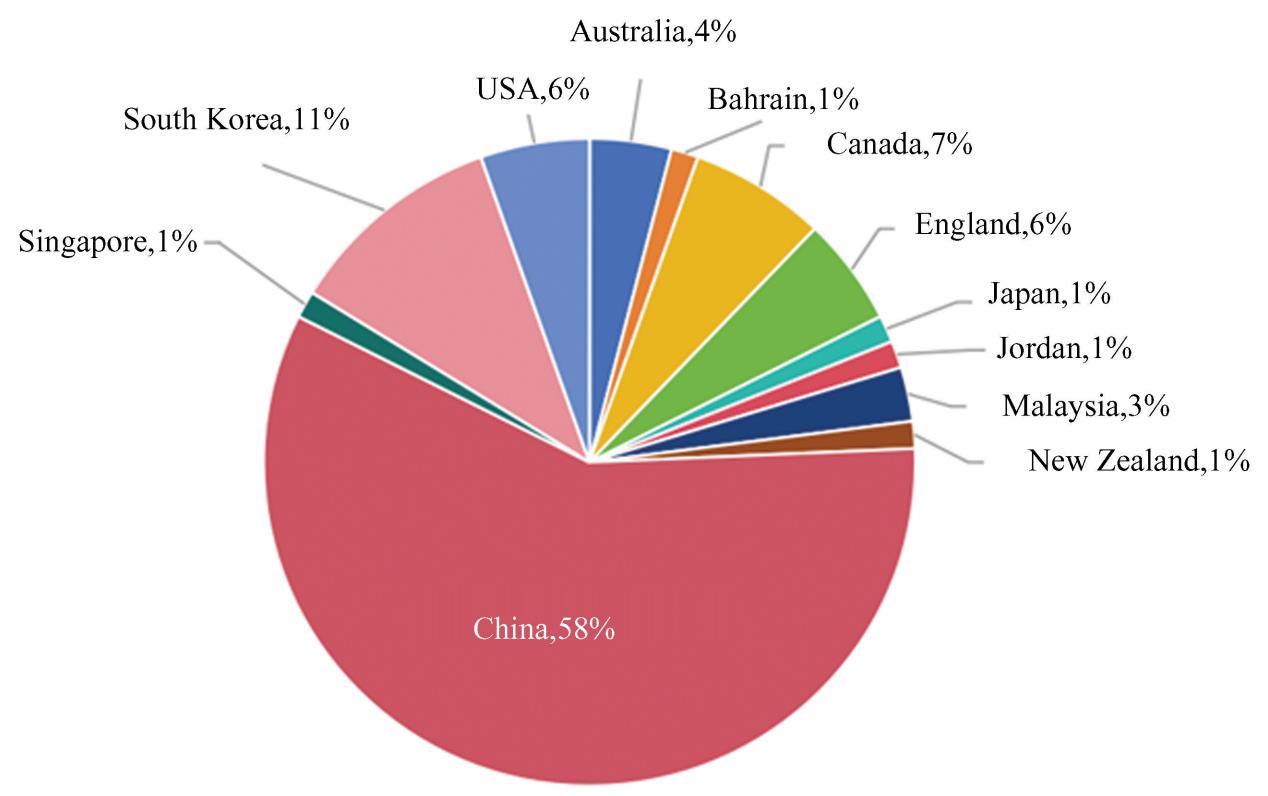
Fig.
5
Geographical location of the articles
2.3 Geographic Cooperation
It should be noted that the local social and economic environment and the development of specific demands influence the research activities of each country. Fig. 6 shows the analysis of countries with active research. The research contributions and cooperation relationships of each country can be mapped to the size of nodes or fonts,and the color changes of connecting lines. It can be seen that China is the earliest and most research-oriented country and has cooperative relations with various countries. In recent years,China has had relatively close cooperation with Canada and South Korea.
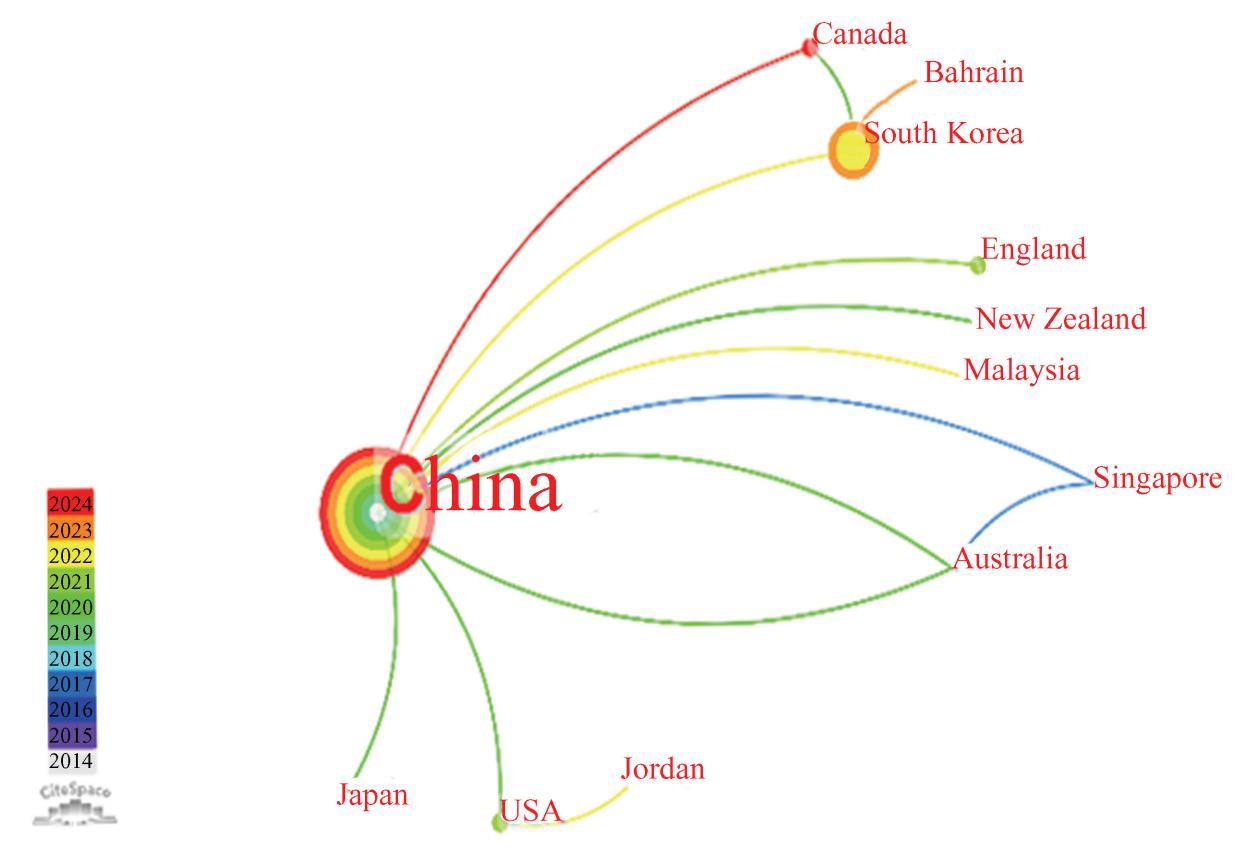
Fig.
6
Countries active in research
The number of documents and total citations can be used to evaluate a country's research productivity,but Table 2 shows that the number of documents,total citations,and average citations are not necessarily positively correlated. It can be seen that a country's research influence and research contribution are not solely determined by the number of published articles. However,in terms of the number of publications,citations,and average citations,China leads. Among other countries,South Korea has published more than others,Canada and USA are more active in citations. Therefore,it can be seen that China is actively promoting sustainability and vigorously developing prefabricated buildings,and has also achieved certain results in this research direction,establishing high relevance and strong influence.
Table
2
Major contributing countries in PC transportation automation research

2.4 Source Analysis
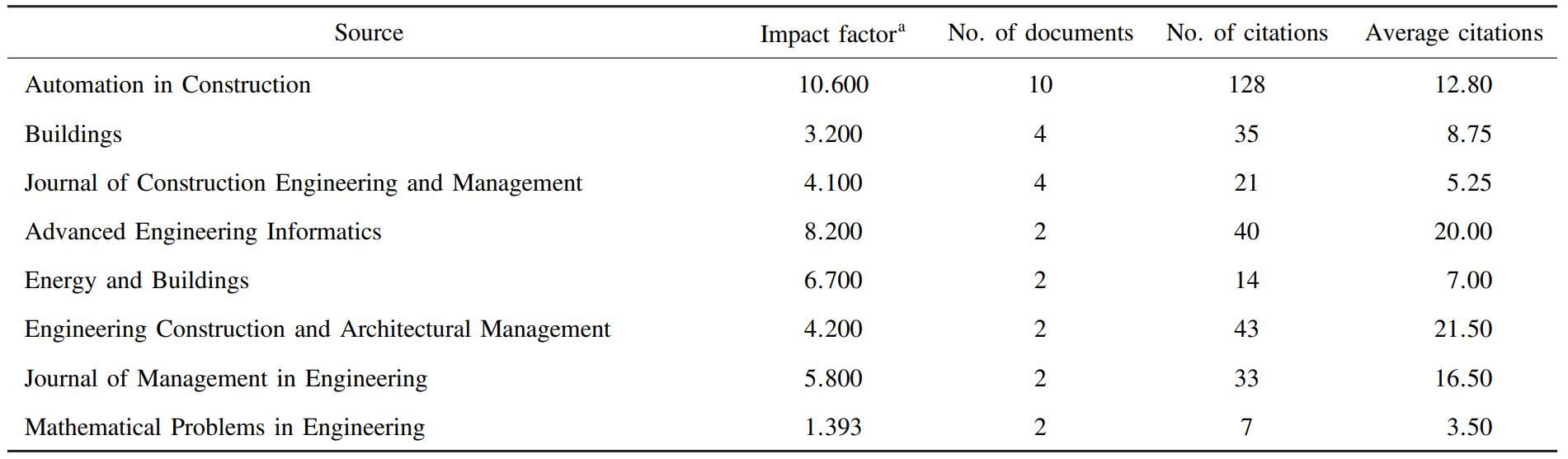
Table 3 lists the top eight journals in the literature collection. It can be clearly seen that publications on PC component transportation automation tend to be published in the top three journals on the list:Automation in Construction,Buildings,and Journal of Construction Engineering and Management. In terms of the impact of each publication,it can be seen that the journal with the highest average number of citations per article is Engineering Construction and Architectural Management. It should be noted that because documents have different publication times,new documents have lower citation counts,while hot articles with high citation frequency will increase the average value,leading to bias in the average citation calculation. It can also be seen from the impact factor that most of the documents in the final literature list are published in journals with high influence,indicating that cutting-edge research in the field is covered and ensuring the research quality and credibility of this study.
Table
3
Source analysis
Note:“a” represents recent five-year average.
2.5 Most Cited Articles
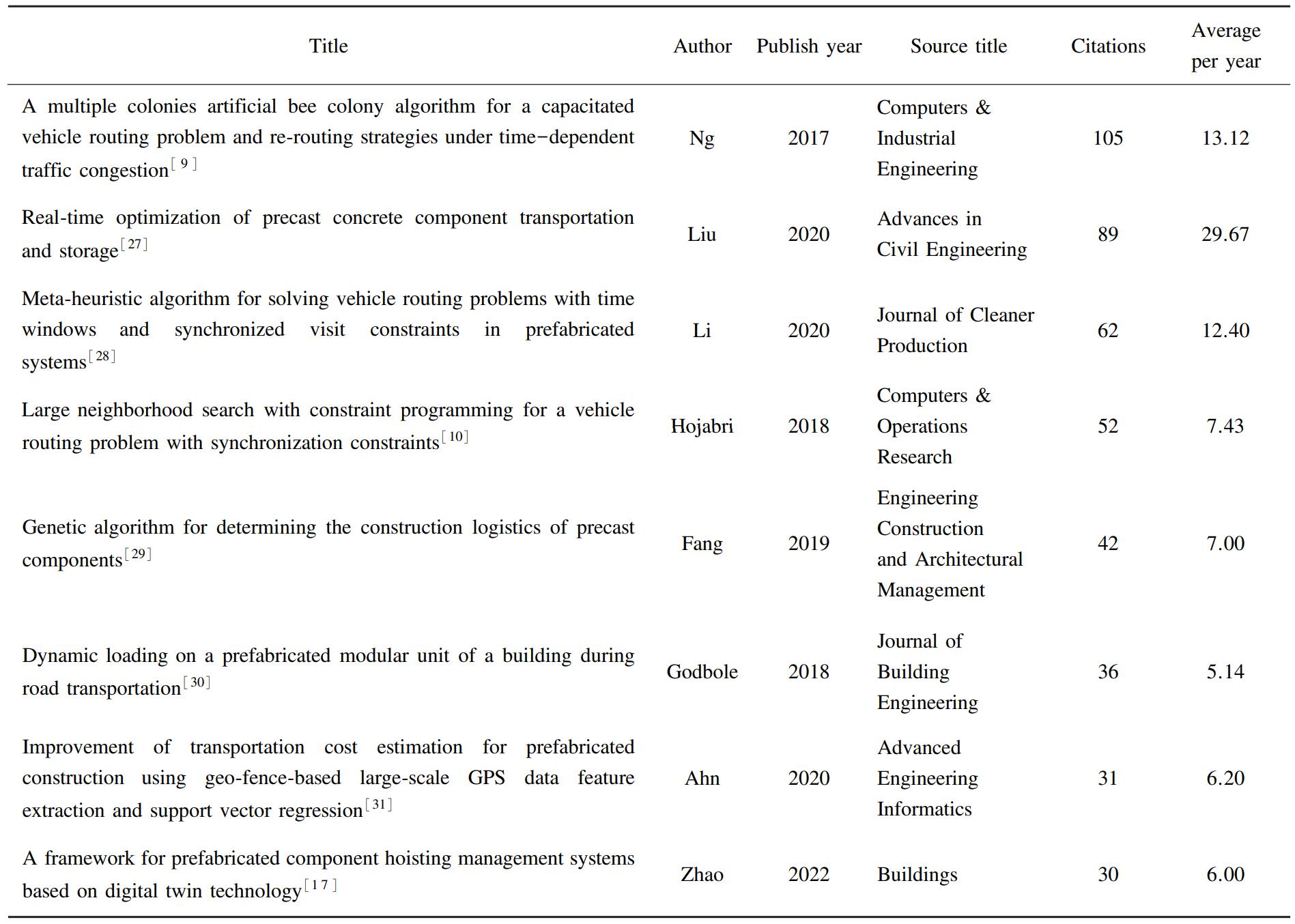
As shown in Table 4,the eight most cited articles in the literature collection are displayed. The most cited article[9] was published in 2017. It discussed the problem of real-time adjustment and optimization of the transportation paths of transport vehicles in an early period and was widely cited in transportation scheduling optimization across various fields. The second most cited article[27]researched the transportation and stacking of PC components at the construction site to improve transportation efficiency.The third article[28]studied the scheduling problem of establishing a prefabrication system for PC component transportation. Combined with the remaining literature,it is not difficult to see that the automation research of the PC components transportation stage in recent years has mainly focused on optimizing the transportation path and transportation scheduling in the transportation stage,with the main research purpose of improving transportation efficiency.
Table
4
Most cited articles in the field of automation in the transportation of PC components
2.6 Cluster Analysis of Keyword Co-occurrence
The keywords of an article are the researcher's summary of the article's main idea,which can reflect the main research direction of the article[32].Therefore,this paper uses CiteSpace to perform cluster analysis on the co-occurrence of keywords in the literature collection,presenting the keywords that appear frequently in the research of PC transportation automation,which can represent the hot research topics in this field to a certain extent,and explain the current status and future research directions of the field. Using CiteSpace to automatically cluster keywords and accurately extract cluster labels to generate visual cluster data,rather than using the common prominent grouping network,can reflect the attributes of different clusters through the generated cluster labels,which greatly helps in understanding the content of the network[33].
The CiteSpace analysis report shown in Fig.7divides the main clusters in the literature collection into seven categories:prefabricated wall panel,vehicle routing,component allocation,energy,identification,monitoring,and off-site construction. By analyzing the keyword density,the modularity value Q= 0.812 4.When Q> 0.300 0,it means that the divided cluster structure is significant. The average silhouette coefficient S= 0.940 9,when S> 0.700 0,means that most of the nodes are divided into the correct clusters,and the generated clusters are convincing[34].Therefore,Q and S can prove that the generated keywords network clustering structure and classification of PC component transportation automation research are quite reasonable.
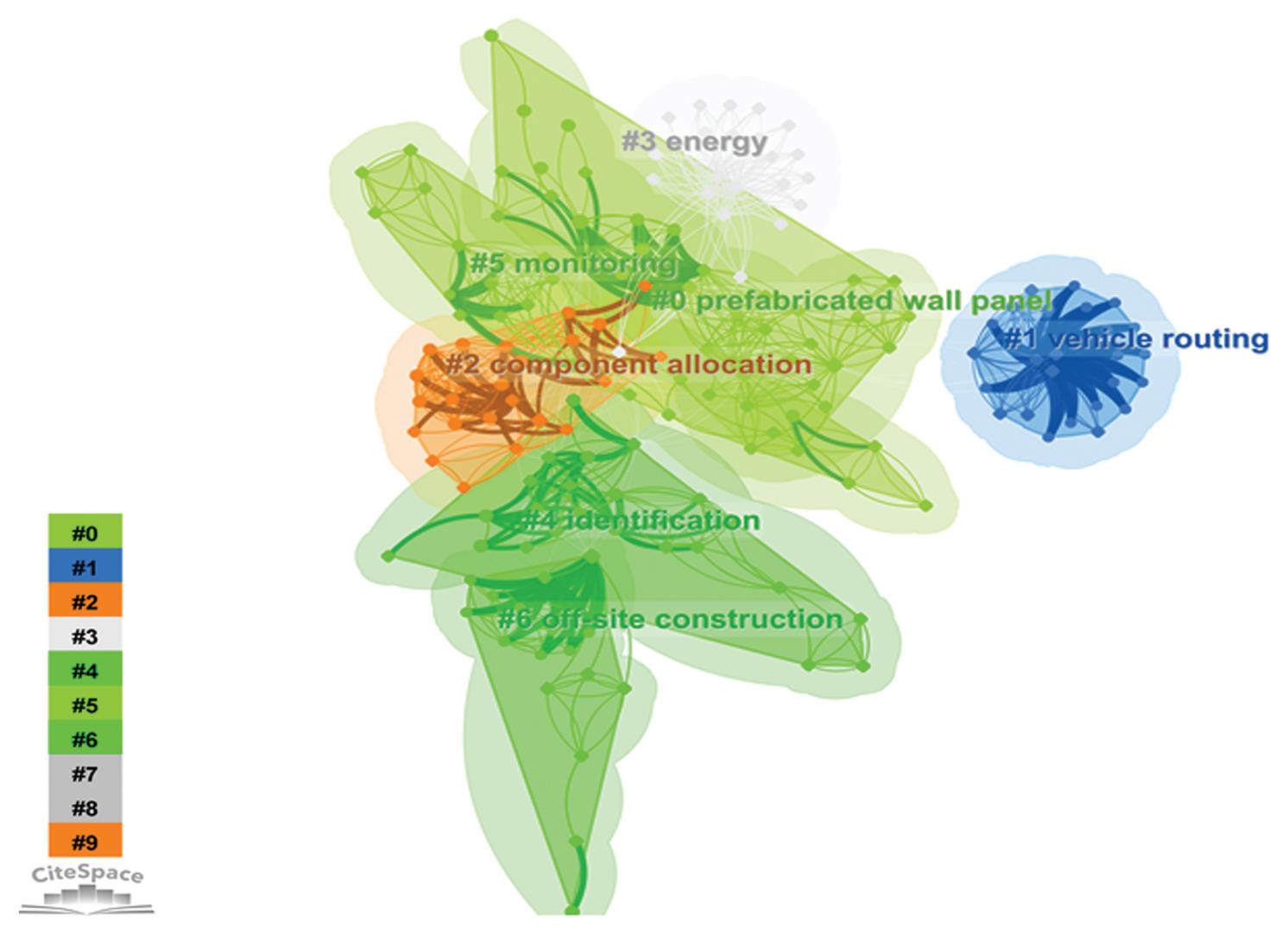
Fig.
7
Map of scientific analysis of keywords cluster
According to Table 5 and the keyword co-occurrence timeline diagram in Fig. 8,the research contents covered by the keywords of the following clusters,clusters 0,1,2,4,and 5,basically cover the entire process of PC component transportation automation. This includes research on component path planning,stacking distribution,monitoring and identification,etc. Specific research on these hot spots can help us fully understand the research status and development trend of this research field. In addition,clusters 3 and 6 are not direct contents of transportation automation,but they are related to it.Cluster 3 is related to energy consumption in transportation,and the energy and modeling design may affect transportation efficiency. The off-site construction in cluster 6 expands the scope of research to study the prefabricated building supply chain,including factories,transportation,and construction sites,systematically optimizing the entire PC component automation process[14,35-36].
Table
5
High-frequency keywords of each cluster
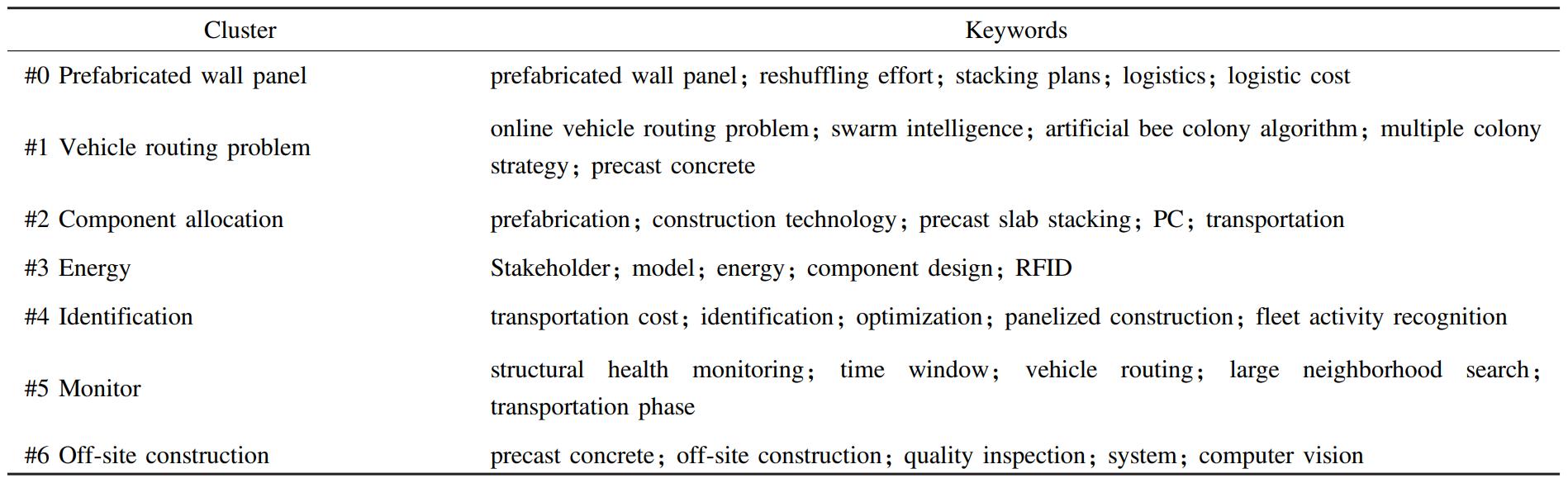
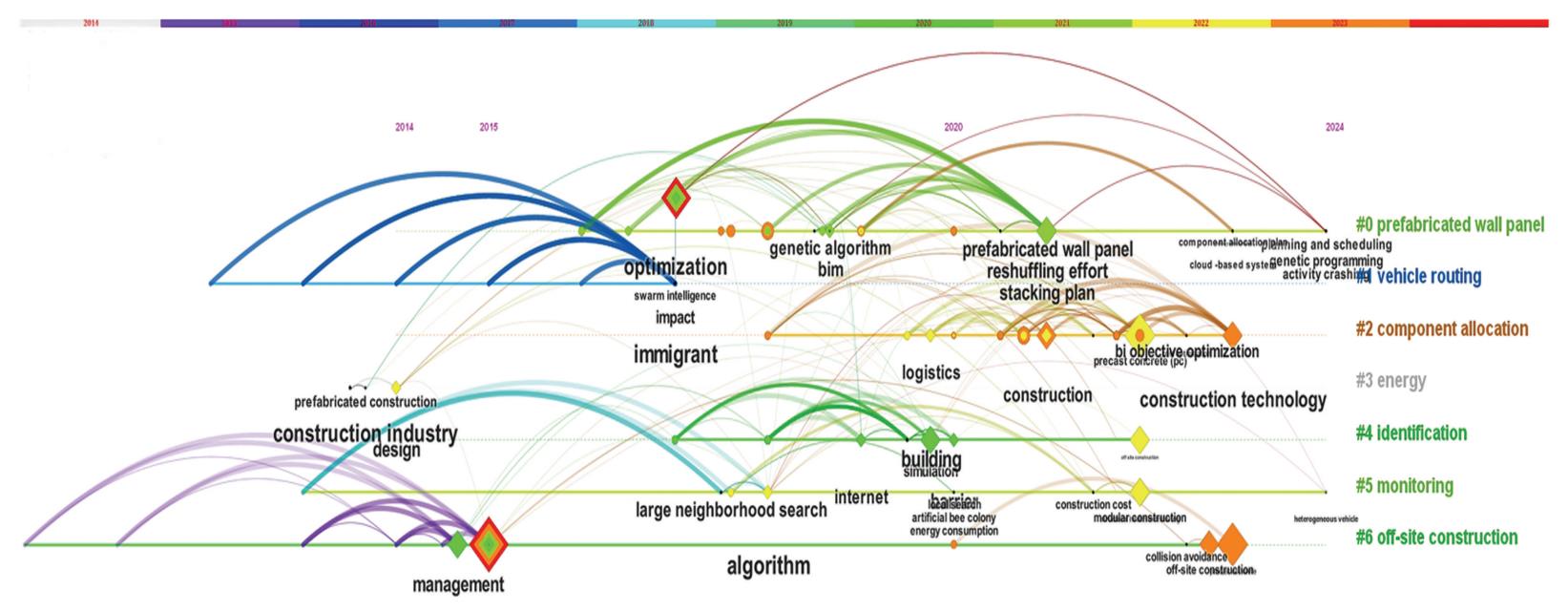
Fig.
8
Timeline of keywords cluster
Firstly,the keywords such as “ vehicle routing problem”,“ energy ” and “ off-site construction ”included in the clustering form a research framework centered on optimization and scheduling. This part of the research focuses on logistics transportation of prefabricated buildings,optimizing transportation routes,minimizing energy consumption,and constructing vehicle scheduling models. It has a relatively early development timeline and research interest has been steadily increasing,indicating that in the process of prefabricated construction,the efficiency optimization of transportation has become an important research direction.
Secondly,“ prefabricated wall panel ” and“ component allocation ” form another significant cluster. This type of research focuses on prefabricated building components(especially PC components such as wall panels)and issues such as component allocation,yard layout,and lifting sequence optimization. Its time evolution shows that this direction gradually integrates with the “ off-site construction” theme,reflecting that the management of component circulation is shifting from single-stack optimization to full-process logistics coordination.
Finally,“ identification ” and “ monitor ” are closely related to words such as “ construction technology”,“internet” and others,forming the core domain of “ monitoring and identification research”.This direction focuses on component identification,construction process monitoring,energy consumption monitoring,and information management,and conducts research by combining technologies such as the IoT,computer vision,and BIM. In terms of time,this theme has significantly increased in recent years,indicating that the industry's research focus is gradually shifting towards intelligent and digital construction management.
Combined with the clustering analysis based on keyword co-occurrence,it can be judged that the literature collection is highly related to research on realizing the automation of the transportation stage of PC components. Therefore,the above research is summarized and the main research topics are determined as follows:1)transportation vehicle scheduling research;2)PC component allocation and stacking research;3)monitoring and identification research.
3 Discussion
This section reviews the literature according to topics,aiming to understand current research topics and development trends in the transportation stage of PC components. According to the results of the bibliometric analysis of the research sample in Section 2,it is summarized into three topics. The research progress in this field will be reviewed through these three topics,and the development status and development trends of each research topic over the past few years will be introduced in detail. The publication years of the research sample articles range from 2013to September 2024.
3.1 Research on Vehicle Scheduling
The complexity of PC component vehicle scheduling problems significantly affects the overall project construction of prefabricated buildings.Transportation planning not only directly affects transportation costs,but also indirectly affects the amount of on-site rework,the progress of the construction project,and the quality of PC components during transportation. It is difficult to complete systematic,comprehensive transportation planning solely by relying on communication between construction managers and factory managers and on IT tools such as Microsoft Excel and Word. However,establishing a transportation management platform that integrates IoT sensors and cloud technology can reduce the documents and procedures required for PC component transportation planning,thereby enabling more effective transportation planning[16]. Current research on vehicle transportation planning of PC components can be divided into 5 categories as follows.
1)How to use heuristic or optimization methods to determine PC component transportation routes,component allocation,and vehicle types. According to different research goals,there are different studies on heuristic algorithms,such as local search algorithms,population-based search algorithms,and swarm intelligence(SI)algorithms. Nowadays,SI draws on group activity behavior to determine the optimal solutions and has been widely used in transportation route planning. The artificial bee colony(ABC)algorithm is a commonly used group intelligence optimization algorithm. The improved artificial bee colony(IABC)algorithm can be applied to solve vehicle routing problems with time windows and to solve the cross-synchronization problem in transporting PC components[9,37]. The improved hybrid differential firefly algorithm(IHDFA),a firefly intelligent algorithm combined with the multi-objective aggregation optimization algorithm,can handle the optimal dispatch plan for PC component vehicles in complex urban network[38].
In addition,for more complex transport vehicle planning problems,the optimization algorithm needs to add appropriate constraints to obtain a more efficient transport vehicle plan. At present,some studies consider the synchronization constraints between two different types of vehicles and use the adaptive large neighborhood search method to solve a vehicle routing problem with time windows[10]. The knowledge-driven multi-objective optimization algorithm considers the cost trade-off among multiple transport vehicles and the relationship between transportation volume and time,and aims to minimize the total transportation cost and time to solve the multi-frequency vehicle routing problem for prefabricated components(MFVRP-PC)[39].
2)Related research on the prediction of transportation cost and time management using genetic algorithms or mathematical models. Genetic algorithms(GA)are used to model the transportation stage of PC components. Combined with logistics progress and construction plans,genetic algorithms can identify the best delivery and construction plans while ensuring the lowest transportation cost[29]. In addition,BIM can be further combined to enhance visualization. However,it is difficult to use algorithms in conjunction with BIM to extract and modify parameters in practice.Currently,there is a construction site layout planning(CSLP)that integrates BIM and optimization algorithms. It uses a Dynamo visual programming platform to create an information channel between BIM and optimization algorithms to achieve efficient information transmission. It successfully solves the problem of extracting data from BIM platform files[40].An automated component delivery management system obtains data from BIM,extracts progress and logistics data from the scheduler and Web Map Service,respectively,and efficiently processes the data to manage uncertainties in construction progress. Finally,the system can ultimately minimize transportation costs and unnecessary time losses[12].
3)Analyze the correlation between the specific characteristics of PC components to determine the scheduling plan for transport vehicles. Due to the characteristics of PC components such as various shapes,large volumes,and strict delivery times in recent years,in PC projects,the scheduling of transportation vehicles needs to integrate more information,such as vehicle capacity,site stacking,installation sequence,and component size,the automated component-vehicle allocation plan needs to integrate factory,transportation,and site information in the project and formalize the transportation scheduling process to effectively promote the construction progress[35,41]. Transport scheduling requires the addition of factors,such as special-shaped vehicles,mixed time windows,and component-vehicle matching,to optimize the algorithm and achieve the optimal vehicle scheduling plan with the minimum transportation cost[11].
4)Studies on the transportation scheduling plan for the building supply chain in prefabricated construction projects. Although the sensing,processing,and communication capabilities in supply chain management have been proven to improve logistics safety performance,there are still areas for improvement in the elements contained therein,such as the process from production and transportation to on-site assembly. Existing research has explored hybrid smart-car tools and technologies to build supply chain management systems that meet the requirements of PC construction solutions[15]. At the same time,the supply chain's transportation scheduling focuses on integrating the transportation plan with other supply chain operational elements to formulate the optimal logistics plan and fully automate the main scheduling process. Besides,the simulation-based automated overall planning and scheduling method effectively reduces the risk of transportation delays[36].
5)The transportation hardware equipment system is also a crucial foundation for achieving efficient and safe transportation. Commonly used vehicle equipment includes dedicated low-flatbed semi-trailers,modular multi-axle trailers,etc. The selection and matching of transportation vehicles need to be based on the characteristics of the components. In addition,the vehicle chassis suspension system and the multi-axle steering system determine maneuverability and safety on narrow urban roads or construction sites. Secondly,the application of sensing and monitoring equipment is an important support for transportation intelligence. By installing GPS positioning modules,stress and strain sensors,etc.,on vehicles and components,real-time monitoring of transportation status can be achieved,risks such as overloading,deviation,or abnormal vibrations can be identified,and it can be linked with transportation scheduling algorithms to achieve dynamic adjustment of transportation routes and speeds,ensuring the safety of component transportation. Moreover,loading and auxiliary equipment also significantly impact transportation efficiency. For example,supporting hydraulic lifting systems and intelligent fixation and protection equipment can reduce manual intervention. Future research can incorporate the operational status data for this equipment into the transportation management system to achieve a full-process digital closed-loop from transportation planning to execution.
Overall,the existing research on transportation scheduling of prefabricated components not only explores algorithmic optimization but also considers practical engineering constraints to varying degrees,such as vehicle load limits,on-site stacking space,installation sequences,and the irregular geometry and fragility of components. Some studies have attempted to integrate factory,transportation,and on-site information within actual projects. These factors are crucial for practical scheduling decisions,indicating that optimization models must be closely aligned with engineering practice. However,most studies still focus on idealized geometric configurations and fixed site conditions,which limits their engineering applicability. Future research should therefore validate models using real project data and incorporate dynamic on-site conditions to enhance their practical relevance.
3.2 Research on PC Component Allocation and Stacking
The allocation and stacking of PC components are important parts of research on automating the PC component transportation process. Efficient automated allocation and stacking can improve transportation efficiency and reduce transportation costs. At present,the stacking decision for actual projects is based solely on the experience and intuition of the factory production manager,which may lead to low stability and a high reorganization workload for PC component stacking,greatly reducing the transportation efficiency of PC components and increasing transportation costs[42]. Therefore,in recent years,scholars have conducted extensive research on the automated stacking allocation scheme of PC components to solve the problems existing in PC component stacking planning,and have made certain progress.
3.2.1 Trailer stacking optimization
The stacking optimization of PC components involves the interests of all parties,so the component stacking model typically focuses on optimizing the efficiency of the entire “ production-transportation-construction” stage. Factories need to ensure that PC component stacks are stable enough to be transported safely without incurring additional damage costs;transport operators hope to ensure that vehicles are within the load-bearing capacity and dimensional space of the transport vehicle;construction site managers hope to generate PC component stacks that conform to the installation sequence and reduce reorganization work to speed up the assembly progress on the construction site[43-44]. However,it is difficult for stacking planners to develop a stacking plan that meets the requirements of all parties at the same time,that is,it is difficult to achieve optimal resource allocation and obtain the Pareto optimal solution. To improve the transportation efficiency of PC components during transportation,scholars consider factors such as PC component loading stability,reorganization work,and trailer capacity when studying the automatic generation of stacking plans. They usually establish corresponding mathematical models and use appropriate algorithms to optimize stacking plans,reducing the number of trailers used or preventing trailer imbalance.
The evaluation criteria for the stacking stability of PC components are constantly evolving and often rely on quantitative thresholds for the interlayer contact area. The early criterion for PC component stacking stability was based on a 75% contact area threshold for panel stability,proposed by Carpenter and Dowsland[45]in 1985 in a study focused on general panels. In recent years,research specific to PC slabs,informed by expert opinion,has established a 70%area ratio as a commonly adopted stability threshold for PC slab stacking[21,42],which is now applied in automated stacking optimization of PC components.The stability and reorganization of the stacking are considered to be key indicators for evaluating the validity of the stacking scheme. Two influencing factors are usually considered in recent research on the automatic allocation of PC component stacking. Stack stability reflects that the stacking structure does not undergo overturning or sliding under the action of self-weight and external forces,and it is the core of safety.The reorganization workload is expressed as the additional number of handling and rearrangement required to meet the out-of-storage or installation sequence. It directly affects the construction efficiency and cost. Therefore,in automatic allocation optimization,stability is usually treated as a hard constraint,and reorganization cost is the optimization objective. Through strategies such as multi-objective trade-off,zone stacking,and physical reinforcement,the balance between safety and efficiency is achieved,thereby obtaining a stable and efficient stacking scheme.
Scholars have already developed stacking mathematical models and optimization algorithms,intended for different transportation conditions,to realize the automatic allocation of the stacking process.In early research on the PC component loading scheme during transportation process,the loading amount was optimized based on the total weight and volume of the load,without considering component conditions[46].The current stacking optimization problems are all centered on PC wall panels and PC panel components.The transportation of PC exterior wall panels is mostly carried out by vertical stacking on trailers with A-frames[47]. During the research process,the dual objectives of minimizing the number of trailers and balancing their weight are considered for the first time,as well as a mixed integer programming model with multiple influencing factors and an automatic stacking allocation optimization scheme of a non-dominated sorting genetic algorithm[43]. However,the current research method cannot be applied to the stacking schemes of other types of supporting frames and PC components. For ordinary PC slab components,most of them are horizontal stacking schemes. Considering the factors of stacking stability and reorganization work,some studies have formalized the PC slab stacking generation process and automatically generated different stacking schemes with strict installation order(less reorganization work)by increasing the tolerance value of the area difference between the boards,to meet the needs of different project engineering and facilitate operators to consider the storage area of the construction site to determine whether rapid installation is required[21]. At present,the automatically generated stacking scheme mainly adopts heuristic algorithms,which can only obtain approximate solutions to the Pareto optimal solution and are prone to fall into the dilemma of local optimal solutions[47-48]. To obtain the optimal solution,an exact integer programming algorithm is proposed to obtain the Pareto optimal solution,which lays the foundation for the application of mathematical methods in future research[49].
PC components are mainly transported by road,but some prefabrication plants use sea transport as their primary way of transportation. Yi et al.[48]first studied the loading planning of PC components in cargo holds for ship transportation of PC components,and developed an automatic planning model for the minimum number. However,there exists some research on sea transportation that neglects the contact and actual shape of components currently,making it difficult to ensure stability during transportation. It is necessary to introduce some relevant research on road transportation to promote shipping efficiency.
3.2.2 Stacking and hoisting optimization in warehouses and construction sites
To reduce the waiting time for component transportation,some scholars have researched stacking allocation optimization for prefabricated component factories and construction sites. Similar to the automatic optimization of vehicle stacking,a storage stacking allocation model is established through PC component production information and component on-site hoisting plan at first,then a heuristic algorithm calculation model is used to obtain the warehouse stacking optimization plan,and a batch of PC components produced is automatically allocated to the most suitable stacking position,which improves stacking stability and reduces reorganization work[22].At the same time,to reduce on-site transportation and hoisting time,a dynamic storage optimization model is formulated based on real-time transportation information and construction progress to determine the on-site stacking position of each PC component[27].
In addition,the optimization research of component hoisting and transportation processes cannot be ignored. The lifting time for each PC slab is about10 min[22],so reducing hoisting transportation time and improving hoisting accuracy are also key to improving the efficiency of the transportation stage. At present,there are three main areas of research on the optimization of stacking and hoisting for PC components. The first is to use genetic algorithms or particle bee algorithms in heuristic algorithms to optimize the layout and dynamic scheduling of cranes[18,50]to reduce transportation time;the second is to track the transportation status of PC components and monitor important information,such as strain,acceleration,component position,during the lifting process all the time,to prevent collisions during the lifting process[19,51-52],ensure component safety and improve lifting accuracy;the third is to guide the robot to automatically adjust the PC components in the crane lifting state instead of manual work,ensure stability and improve efficiency consequently[20,53].
3.3 Monitoring and Identification Research
Automated monitoring of the transportation phase of PC components is also vital. The real-time progress of the construction site usually needs to be considered in transportation plans,and the construction on the construction site is uncertain. Therefore,it is necessary to monitor the transportation phase to ensure that the construction is on schedule. The monitoring of the transportation phase mainly monitors and tracks the vehicle trajectory,component status,and energy consumption in real-time during the vehicle transportation process to achieve scheduling optimization and ensure that the vehicle and PC components are in normal condition during the transportation process.
At present,scholars mainly use GNSS or GPS technology to track the real-time location of PC components during transportation to obtain vehicle trajectory and use RFID radio frequency identification technology to identify individual component numbers[54],record source information,aggregate and store RFID and location data,then build a complete and traceable BIM model,predict PC component transportation time,record quantity and type[27],to improve transportation scheduling efficiency.
It is also significant to monitor the health status of PC components during transportation. Monitoring damaged PC components can control risks before installation and retain evidence. At present,the monitoring of PC components during transportation is relatively simple,and the status of PC components is mainly monitored using acceleration sensors. Some scholars have tried to use numerical simulation methods to simulate the acceleration of PC components when the trailer moves on the road[30],but the results obtained based on assumptions are difficult to match the actual situation. Therefore,some studies have shown that using sensors to obtain acceleration data during transportation better reflects actual conditions.Besides,structural damage to various precast concrete(PC)components can be classified by analyzing the recorded data using a data analysis system,making the approximate locations of the damage identified more convenient[55],but this is not real-time monitoring.Therefore,further attempts are made to synchronize dynamic response data from sensors in real time and combine BIM models and DT technology to realize integrated coordination of virtual and real PC component damage monitoring and prediction[56].However,this technology is a replica of the actual project,which is expensive and requires significant resources,making it difficult to promote in the complex engineering environment of the complete supply chain.
At present,the energy clustering in Table 5mainly focuses on the automatic monitoring of energy during the transportation of PC components to calculate carbon emissions and plan routes to reduce costs[57]. Due to PC component transportation increasing the transportation volume and transportation distance compared to traditional construction transportation,the energy during transportation may cause the implicit energy of the entire life cycle to increase by more than 10%[58-59]. Therefore,it is necessary to conduct appropriate monitoring to determine carbon emissions in the transportation stage.In the past,the research took vehicles as the research object and directly calculated the carbon emissions of the vehicles,without considering the impact of PC components. To address this,researchers took the PC components of different loads and quantities as conditions,using the fuel consumption of oil trucks as the carbon emission monitoring object to calculate the carbon emissions under component load,average speed and atmospheric temperature[60]. With the proliferation of electric vehicles,the carbon emissions of PC component transportation by electric vehicles were studied to fill the gap of BEV(battery electric vehicle)in the transportation stage[61-62]. However,the current research object is only carbon emissions from small vehicles,which cannot be directly applied to the analysis of carbon emissions from medium and large vehicles.
Identification and monitoring research are often related[54]. In 2007,RFID was used to identify PC components and combined with GPS to locate the stacking position in the yard[63]. In the real-time transportation process,logistics identification was used to enable progress tracking and warehousing optimization[27]. Then,a platform system was further established to obtain real-time data and to provide cloud-based automated PC transportation planning information[16].
In addition,identification focuses on realizing automated data processing through computer vision.On the one hand,the monitoring and identification of the PC component stacking and hoisting process can be achieved by processing image data using computer vision. And unsafe conditions of workers can be automatically identified[52,64]. On the other hand,laser scanning was used to automatically identify and locate the surface lifting rings of large PC components,and the position of CHR was determined through pattern recognition to achieve quick hooking[20].
3.4 Future Research Trends
3.4.1 The gap between existing research methods and actual requirements
1)In the current research on PC component transportation planning,most scholars focus on two aspects:(1)optimization algorithms for determining transportation routes,component allocation,and vehicle types,and(2)management predictions for transportation costs and time.
Swarm intelligence optimization algorithms have gradually become a common method for improving vehicle scheduling. Although it can simulate the actual situation of the transportation process of prefabricated components by introducing specific factors such as road resistance functions,it can significantly improve the energy,cost,and time efficiency of construction.However,there are still some problems,such as the failure to achieve the global optimal solution and the need to improve the global detection capability of the search mechanism balance algorithm[38]. The unique constraints of the prefabricated system are not considered,which causes a gap between the prefabricated structure and the VRP algorithm. It is necessary to supplement the mathematical model with constraints such as vehicle type and cargo capacity[28].The constraint correlation between the transport vehicle routes also needs to be further processed. It is necessary not only to combine neighborhood search with constraint programming but also to combine it with adaptive time constraints to effectively improve the efficiency of transportation scheduling[10].
Research on transportation cost and time management prediction is based only on a one-to-one relationship between the main contractor and the supplier. It does not consider that the logistics relationship in reality is a complex network system.Existing cost functions and simulation methods fail to meet the needs of multiple stakeholders and material selection[29]. At the same time,the fixed order period delivery plan for PC components based on cost-effectiveness cannot guarantee optimal transportation costs and carbon emissions[12].
2)At present,the automatic distribution and stacking methods of PC components focus on the research of plate or wall panel components and are still at the basic research stage. Because there are various PC components and vehicles of different sizes and shapes in the actual transportation process,only specific vehicle models and components are currently considered,which is difficult to apply to complex actual construction[43,47].
In addition,most of the stacking models currently established consider stacking stability and reshuffling effort conditions,but in actual situations,more factors need to be considered,such as the maximum number of stacking layers,the location of the padding,and the size of the flatbed trailer,which will affect the quality of stacking[21]. In addition,several stacking optimization algorithms currently used can effectively improve stacking stability during case study simulations,but most of these algorithms only solve the mathematical model and have not yet been applied in practice.
3)The monitoring and identification methods during the transportation of PC components are mainly used for component health monitoring and calculating the energy consumption of the component-vehicle.Monitoring and determining whether components are damaged by the acceleration and vibration of transported components only simulates damage at the level and does not directly and clearly reflect component parameters,such as deformation and stress changes[30,54]. As for the method of identifying object modeling or monitoring technology for health monitoring during the lifting process of prefabricated components,computer vision algorithms have difficulty in solving the problem of interpreting,correlating,and analyzing complex data in the case of multiple pieces of information,and can only rely on manual scanning[20,52]. Chang et al.[46]established a relevant transportation mathematical model to maximize the loading capacity of prefabricated components in ships or trailers and minimize the number of vehicles. However,their model only considered the research object as general components and failed to take into account the installation sequence of the components and the problem of on-site re-stacking. Therefore,existing mathematical research models still need to be further optimized and improved to address specific issues,such as component stacking stability and re-stacking[21].
When calculating the energy consumption of component vehicles,the carbon emissions of different levels of vehicles are often monitored. The current research objects are only small vehicles,and the carbon emission factors of different levels of transport vehicles also have large differences. It is impossible to accurately calculate the energy consumption of medium-or large-sized transport vehicles based on existing research[61-62].
3.4.2 Future directions
The prospect of future research directions in the study of PC component transportation automation is based on the quantitative and qualitative analysis of existing research topics in this paper.
In the future,the transportation scheduling optimization algorithm will still be the key means to solve the PC component-vehicle allocation problem.Two aspects can be focused on. On the one hand,it is necessary to consider the interval scheduling time and to design a multi-objective algorithm framework. On the other hand,it is also necessary to consider economic constraints to solve more practical VRP problems,such as the labor cost of driving vehicle personnel.
Therefore,in subsequent research,it is still necessary to further study the stacking optimization methods for different PC components and models under the constraints of stability and reshuffling effort.It is necessary to test the effects of each condition,determine the degree of influence of each condition,optimize the modeling conditions,improve the modeling efficiency and the credibility of the scheme,and enhance the feasibility of the stacking results. In addition,there are many studies on mathematical models of stacking,and research on dual-objective optimization has begun. In the future,mathematical modeling will be deepened and multi-objective optimization research will be considered. It will also combine theory with practice,combine experimental optimization theory,and finally integrate mature stacking optimization algorithms into the automated logistics system for prefabricated buildings to realize intelligent management of the component stacking process.
In the future,the monitoring and identification technology for prefabricated concrete components will rely on more intelligent information and sensing technologies to meet the requirements of precision construction and intelligent operation and maintenance in prefabricated buildings. Future research needs to focus on addressing the signal shielding effect of PFID tags in reinforced concrete components,optimizing the embedding position and packaging method of the tags,and combining UHF-RFID and multi-channel reader technologies to achieve automatic identification and positioning of components throughout the processes of hoisting,transportation,storage,and installation. It also needs to develop embedded strain sensors,acceleration sensors,and temperature and humidity sensors to realize real-time monitoring of the force state,posture changes,and environmental conditions during component transportation. Finally,intelligent optimization methods such as genetic algorithm(GA),particle swarm optimization(PSO),or non-dominated sorting genetic algorithm(NSGA-II)can be introduced to optimize the model for multiple objectives,thereby forming a universal energy consumption prediction model applicable to different vehicle types and component types,providing theoretical models and data references for future related research.
4 Conclusions
This study conducted a comprehensive and systematic review of the literature on the research progress of automation in the transportation stage of PC components and carried out the research using a three-step method. Firstly,relevant literature was retrieved through the WOS and EV index databases.Then,based on the given scientific metrological analysis method,two researchers conducted in-depth literature screening and review,including a total of 56literature samples from 2013 to September 2024,focusing on the development status of research directions to determine the main research topics in recent years. Finally,this paper conducted a qualitative analysis of the literature catalog and an in-depth study of the literature,analyzed the gap between the research methods for each topic and the actual needs,and revealed the future research development direction. The main research results of this paper are as follows.
1)Scientific quantitative analysis shows the latest development of research on PC component transportation automation. Through statistical analysis of publication volume,authors,geographic collaboration,sources,and highly cited articles across various countries,it is found that the number of studies in this direction has gradually increased since2014,reaching a peak in 2022(15 articles),and that most contributions come from China and South Korea.Through keyword co-occurrence cluster analysis,three main research topics are identified and constructed:transportation vehicle scheduling research,PC component allocation,stacking research,and monitoring and identification research. A qualitative review of each topic is also conducted to describe the development trend and explain the current deficiencies.
2)Transport vehicle scheduling is the most important research topic in recent years,as it is most closely related to the transportation process. The PC component transport vehicle scheduling research uses vehicle routing algorithms,such as heuristics and genetic algorithms,as well as component feature analysis and supply chain management methods,combined with IoT and cloud technologies to optimize transportation planning and control transportation costs and time. Ultimately,it improves the efficiency and sustainability of prefabricated construction projects.
3)This study proposes that future research may focus on(1)designing a multi-objective algorithm framework or considering practical constraints to solve the PC component-vehicle allocation problem;(2)developing a general stacking optimization algorithm applicable to various component forms;(3)integrating advanced monitoring and identification technologies to improve the level of intelligent management of the system.
4)The contributions of this study are mainly in three aspects:(1)The current research knowledge structure is established and key research topics are identified.(2)Literature reviews are conducted on each topic.(3)Current hot topics are analyzed and future development trends are predicted.
In conclusion,it is hoped that this systematic review can help researchers understand current research progress and future development trends in automation for the transportation stage of PC components,and provide a reference for their innovative research.
Conflicts of Interest
The authors declare no potential conflicts of interest.
