Abstract
In electrical discharge machining of titanium alloys, the 1400-1600 ℃ melting points of titanium alloys require the input of sufficient discharge energy to melt and vaporize the titanium alloy. However, because of low thermo-conduction, the input energy can easily raise the temperature of the gap liquid to a high enough level. Usually, the elevated temperature of the gap liquid resulted in a reduction of the gap breakdown strength, so that the liquid dielectric deionization after pulse discharging tends to be incomplete and causes occurrences of large arcing pulses, burning the workpiece surface and causing electrode wear. This contradiction hinders the machining of titanium alloy by Electrical Discharge Machining (EDM). To solve this issue, this study thoroughly analyzed the factors influencing gap liquid breakdown strength during EDM and identified two key elements: gap distance and amount of chips left in gap. Based on this analysis, a solution was proposed, which involved the development of a multiple variable adaptive control system. This system adjusted the gap servo voltage in proportion to the gap distance to control the discharge types of pulses, regulated the electrode discharge time to the quantity of chips left in the gap in an electrode discharge time. By dynamically adjusting these two variables, the system maintained an optimal liquid breakdown strength, facilitating effective machining while preventing arcing in machining. Experimental validation confirmed that this multiple variable control system significantly enhanced the EDM process for titanium alloys, even under challenging conditions, demonstrating its practical utility.
0 Introduction
Titanium alloy has gained widespread acclaim across numerous fields of application[1], primarily attributed to its outstanding physical properties, which include a high strength-to-weight ratio, robust high-temperature strength, low density, and remarkable corrosion resistance [2]. Nevertheless, due to its high melting point within the range of 1400-1600℃ and low elastic modulus, traditional machining processes struggle to achieve effective and economical fabrication of this material[3], and the situation is likely to deteriorate further when the geometries of the workpieces impede the tool paths. In this sense, one of nontraditional machining methods, Electrical Discharge Machining (EDM) , theoretically may be a feasible way because of its two remarkable advantages over traditional machining techniques, machining conductive materials and non-contact machining pattern [4].
EDM erodes the materials of work-piece surface by discharge pulses in a gap from several to dozens of micrometers between electrode and work-piece, both immersed in a dielectric liquid. Theoretically, it can machine any conductive material, regardless of its toughness [5]. It is also a non-contacting machining method that eliminates the effects of mechanical stresses, chattering, and vibrations in traditional machining [6]. Therefore, EDM possesses some potential to machine titanium alloy.
Researchers have extensively explored the application of EDM for processing titanium alloys. For instance, Wang et al. [7] developed a fuzzy control system for EDM to enhance the machining of micro-holes in titanium alloys, demonstrating significant improvements in both process stability and efficiency. Additionally, Tsai et al. [8] investigated the benefits of vibro-assisted EDM, revealing that this technique outperforms traditional EDM in terms of material removal rate when using electrodes made of copper and copper-tungsten alloy. Moreover, Yu et al.[9] introduced a hybrid approach combining EDM with atomic machining. This method initially employs graphite electrode EDM to shape the titanium alloy, followed by Abrasive Flow Machining (AFM) to refine the surface. The integration of these techniques not only enhanced the quality of the surfaces of small holes but also boosted overall processing efficiency.
However, EDM did not exert its full function on machining titanium alloy as expected, mainly because of the low heat conduction of titanium alloy [10]. To machine titanium alloys efficiently, a large amount of discharge energy was required to melt and vaporize the melted surface materials since titanium alloys were of high melting points. However, from the EDM mechanistic standpoint, the combination of narrow gap distances, high discharge frequencies, and the low thermal conductivity of titanium alloys often results in a rapid temperature increase in the localized dielectric fluid after each pulse discharge [11]. Elevated temperatures in the gap can reduce the dielectric fluid breakdown strength and hinder its deionization post-discharge. This scenario increases the likelihood of subsequent discharges occurring in areas with weakened dielectric fluid breakdown strength, leading to arcing pulses. Such arcing can damage the workpiece surface, accelerate electrode wear, and destabilize the machining process. Therefore, to effectively solve the challenges of machining hard-to-cut materials by EDM, it is essential to delve into the fundamental mechanisms and refine EDM practices. Specifically, enhancing machining stability hinges on maintaining an optimal dielectric fluid breakdown strength for efficient discharges while preventing arcing pulses during the process.
To enhance the electrical discharge machining performances of titanium alloy, researchers paid attention to reducing the liquid temperature in the gap through optimizing machining parameters [12-16]. However, nowadays, since almost all EDM tools cannot timely regulate parameters in machining due to the open-loop control systems used, the parameter optimizations were only made or deduced by whole machining processes. These parameter optimizations had many limitations [17], because the optimized results could not be matched with closed-loop controlled machining, which timely regulated one or more parameters according to the timely varied machining states.
Maintaining the gap fluid dielectric strength balance during the machining process is a critical requirement for stable EDM of titanium alloys. In this study, the reasons for the decrease in the gap fluid dielectric strength during machining were analyzed in detail, and suggestions were proposed to maintain dielectric strength of gap fluid during machining. Finally, a feasible method is proposed, that is, a multiple variable adaptive control system is established to greatly increase the operation function of EDM tools to complete this proposition. Specifically, in the EDM tool, there are two variables: the gap servo voltage, which is directly related to the gap distance, and the electrode discharge time, which dictates the amount of debris generated during each electrode discharge.During machining of titanium alloys, to ensure the gap fluid's dielectric strength remains intact, these two control variables must be promptly adjusted. This adjustment is crucial for attaining the optimal gap distance and the ideal amount of debris accumulation within the gap.
This study developed an advanced multiple variable adaptive control system for EDM that revolutionized EDM machining of titanium alloy. The proposed methodology outperforms traditional EDM tools in several critical aspects: it maintains a stable machining process without side flushing requirements or operator supervision, achieves faster machining efficiency, and minimizes tool wear. Simultaneously, the innovative approach establishes a framework for mitigating two fundamental constraints in titanium machining operations: excessive tool wear ratios and prohibitive operational costs. These advantages have represented critical barriers to achieving economically viable, high-performance machining of titanium alloys throughout their engineering applications for decades.
1 Analyzing Breakdown Strength of the Gap Liquid as Machining Titanium Alloy
According to the mechanism of EDM, as depicted in Fig.1, during the process, five different types of discharge pulses are present in the gap, namely spark pulses, transient arcing pulses, stable arcing pulses, short pulses, and open pulses [18]. Among them, open pulses do not belong to the category of discharge pulses. A spark pulse is a type of discharge pulse characterized by a distinct breakdown time. Another type of discharge pulse, the transient arcing pulse, has a relatively brief breakdown time and exhibits high-frequency voltage changes during the discharging process. The stable arcing pulse, another discharge pulse, has a shorter breakdown time but with reduced-frequency voltage changes. The short pulse is also a kind of discharge pulse, and it produces the lower voltage when compared with that of all the other discharge pulses, along with even more reduced-frequency voltage variations. The time interval between two consecutive discharge pulses is known as the pulse off time. Its main role is to facilitate the deionization of the gap liquid after pulse discharges. Spark pulses and transient arcing pulses are considered effective discharge pulses. In contrast, stable arcing pulses and short pulses are harmful discharge pulses, commonly referred to as arcing pulses. The discrimination of these pulses is achieved by comparing the sampled gap voltage and current against thresholds, in accordance with the pulse discrimination criteria [19].
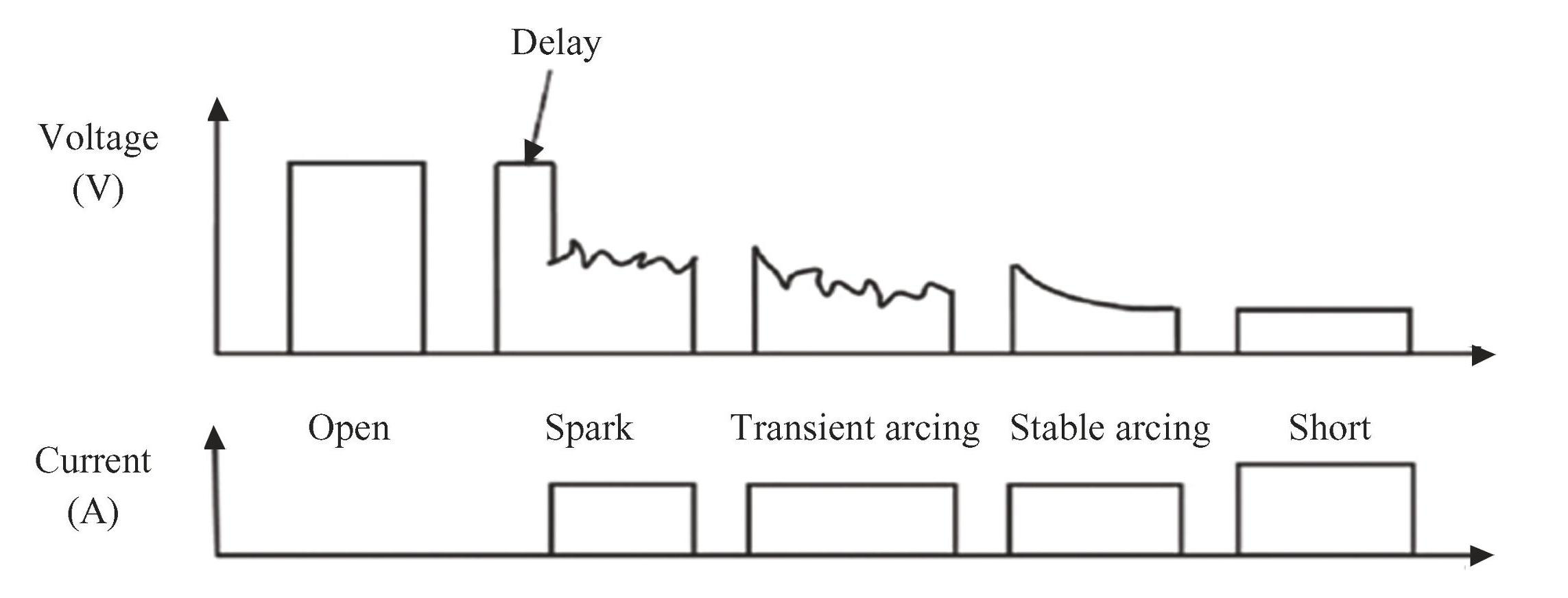
Fig.1Five types of discharge pulses
1.1 Analysis and Conditions of Machining Titanium Alloys
As an active metal, titanium forms a combination with the carbon element. The carbon element is derived from the gap fluid, which is heated by the workpiece surface with local high temperature in the gap. As a consequence, titanium carbide forms in the workpiece [20]. Since titanium carbide has a melting point of up to3150℃, the combination is not easily melted and removed, consequently hindering the EDM process [21]. Hence, it is recommended that positive polarity machining be employed for titanium alloys. In this study, the positive terminal of the tool power source is linked to the workpiece, diverging from the typical negative polarity machining method. This is because the heat produced from the impact of electrons on the workpiece surface is far less than that from the impact of positive ions. Consequently, only a small amount of titanium carbide is created throughout the process.
No.1 condition: the positive terminal of the tool power is connected to the workpiece, while the negative terminal is connected to the electrode. Because the heat resulting from electrons striking the workpiece surface is far lower than the heat caused by positive ions hitting the workpiece surface, the formation of titanium carbide combinations is substantially reduced.
Titanium alloys feature poor thermal conductivity. During the machining of titanium alloys, the molten portion on the workpiece surface increases the temperature of the local liquid within the gap. If the pulse off time is insufficiently long, this often leads to incomplete deionization of the liquid in the area where local discharge occurs following pulse discharges. Experiments conducted on the machining of titanium alloys suggest that the pulse off time should be set to n times the length of the pulse on time.
No.2 condition: To realize an efficient machining speed and a stable EDM process, sufficient deionization is an essential prerequisite. Without proper deionization, the machining cannot proceed smoothly.
In the machining process, the breakdown strength of the dielectric liquid within the gap is not constant; rather, it constantly varies. As machining occurs, this strength attains a satisfactory degree of intensity, the majority of the discharge pulses function as effective discharge pulses. However, as the quantity of chips within the gap increases, the breakdown strength of the dielectric liquid decreases to a certain degree. Once this occurs, the discharge pulses transform into arcing pulses, and the machining operation must be halted. Evidently, the breakdown strength of the dielectric liquid plays a decisive role in the machining process, as it directly determines whether machining can continue smoothly or needs to be interrupted.
No.3 condition: For efficient and stable machining of titanium alloys, it is essential to maintain an appropriate breakdown strength in the gap.
In fact, No.1 condition and No.2 condition are easy to meet, and No.3 condition is the key to stably and efficiently machining titanium.
1.2 Analyzing Breakdown Strength of the Dielectric Liquid
1) Fundamentally, it was the breakdown strength of the dielectric liquid in the gap that decided the kinds of discharge pulses present in the gap.
The nature of discharge pulses in the gap is closely tied to the breakdown strength of the dielectric liquid within it. When the breakdown strength of the dielectric liquid is high, spark pulses predominate among the discharge pulses. In cases where the breakdown strength of the dielectric liquid is of a medium level, transient arcing pulses are the most common type of discharge pulses. Conversely, when the breakdown strength of the dielectric liquid is low, stable arcing pulses or short pulses are the prevalent discharge pulses. Evidently, the breakdown strength of the dielectric liquid during machining serves as the crucial factor in determining the types of discharge pulses in the gap.
2) Two main factors, gap distance and the quantity of chips accumulated in the gap, predominantly influence the breakdown strength of the dielectric liquid.
a) Gap distance plays a pivotal role in determining the gap breakdown strength of the dielectric liquid. A large gap distance contributes to a strong gap breakdown strength of the dielectric liquid, rendering it hard for pulses to pass through the gap. Under such circumstances, the pulses inside the gap mainly consist of open pulses or spark pulses with relatively extended breakdown periods, or both types combined. When the gap distance is of a medium size, it results in reduced liquid breakdown strength. Here, the pulses are predominantly spark pulses with short breakdown times, transient arcing pulses, or a mix of the two types. An even tinier gap distance gives rise to short pulses, contingent upon the particular breakdown strength of the dielectric liquid in the gap. Consequently, by adjusting the gap distance, one can control the types of pulses or the particular proportion of any discharge pulse type within a given time frame. In essence, the gap distance determines the types of pulse discharges.
b) During machining, even if the gap distance remains constant within an electrode discharge time, the gap breakdown strength of the dielectric liquid still varies throughout the cycle. This is because chips are generated during the electrode discharge time, which is a major part of the electrode discharge time, as shown in Fig.2. A large portion of the generated chips is expelled from the gap by the explosion forces of pulse discharging and the retraction movements of the electrode. Assuming that gap liquid deionization is complete after pulse discharges, the increasing number of chips in the gap during the electrode discharge time directly reduces the gap breakdown strength of the dielectric liquid. Therefore, the electrode discharge time is a determining factor for the quantity of chips remaining in the gap. Put another way, the electrode discharging time is also a crucial factor in determining the gap breakdown strength of the dielectric liquid. Gap environment state hereinafter refers to the gap breakdown strength of the dielectric liquid at the conclusion of the electrode discharging time.
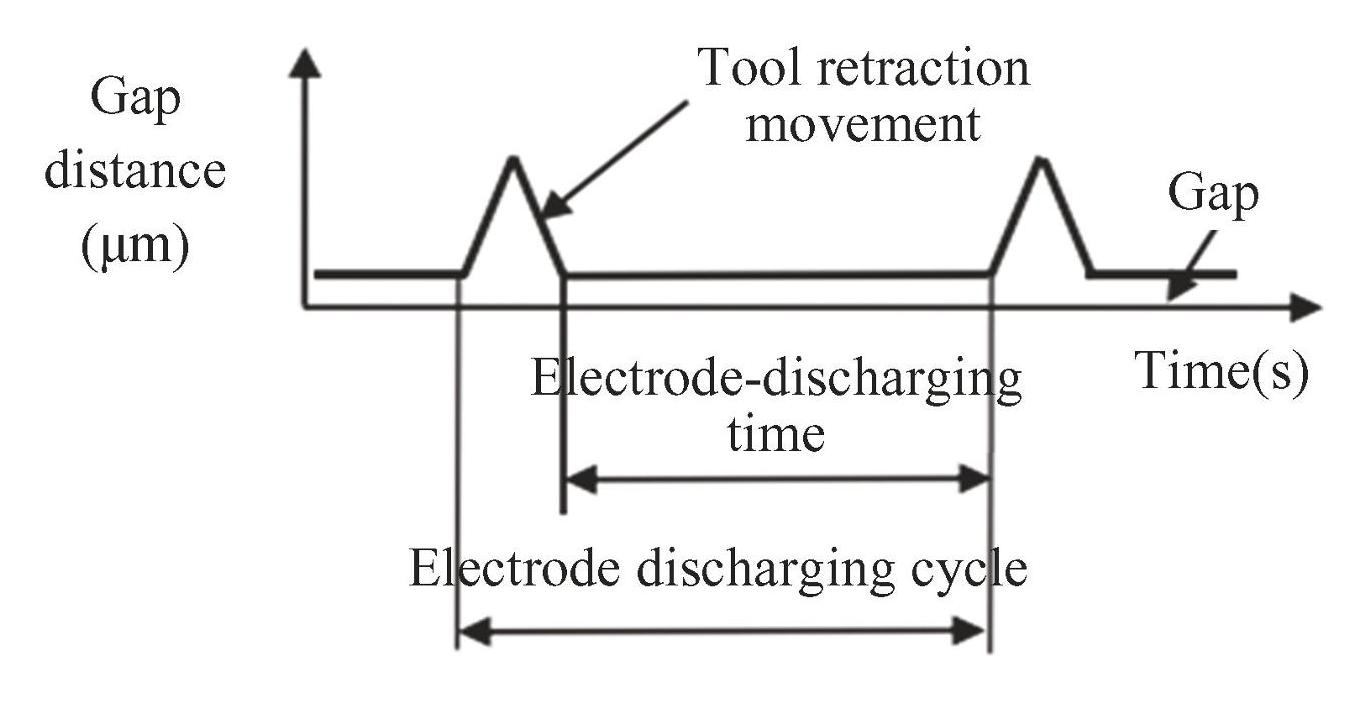
Fig.2Schematic illustration of tool discharging cycle
3) In the machining of titanium alloys, several factors interact to influence the EDM process. The electrode discharge time plays a critical role as it determines the quantity of chips generated during an electrode discharge time and thereby has a direct impact on the gap environment circumstance. Meanwhile, the gap distance ensures the pulse discharging types and thus decides the discharging pulses efficiencies. The quantity of chips in the gap and the gap distance together determine the gap breakdown strength of the dielectric liquid. Because it is hard to measure the gap distance and the gap distance has a proportional relationship with the gap servo voltage, instead of measuring the gap distance, one can measure the gap servo voltage.
Notice: EDM electrical parameters, such as control variables, electrode discharge time and gap servo voltage, should be adjusted without delay. This is necessary to keep the gap breakdown strength of the dielectric liquid at an optimal level, ensuring an efficient machining process and avoiding arcing pulses simultaneously.
In conclusion, a multiple variable control system for EDM had to be built to accomplish this proposition in this regard.
2 Multiple Variable Adaptive Control System for EDM
2.1 Controlled Indexes
In Section 1, we analyzed five types of pulses in EDM and thus defined effective and harmful pulses, respectively. Correspondingly, effective discharging ratio, arcing ratio, and discharging ratio are defined as follows.
Definition 1 An arcing ratio δarc (t) is described as a proportion of harmful discharge pulses to the total number of pulses,
(1)
The arcing ratio is an index that indicates the machining stability of an EDM process. The smaller the arcing ratio, the more stable the machining process, and vice versa. Therefore, the arcing ratio can also be defined as the machining state that reflects the machining situation. From Definition 1, machining state δarc (t) is a statistical index to quantify the types of pulses and discharging types of pulses. Therefore, a machining process can be digitalized by a series of machining states.
A suitable range is described as follows:
(2)
Since various materials possess distinct melting points, the values of during the machining of different materials vary and are experimentally determined. Machining is considered stable as the machining state δarc (t) falls within the range δ, δarc (t) ∈δ1; when the machining process loses stability, the machining state δarc (t) goes beyond the defined range, and arcing pulses become the predominant type in the gap at this moment. Thus, in order to keep the machining process both stable and efficient, the machining state δarc (t) must be confined within δ1.
The gap environment state refers to the machining condition at the conclusion of the electrode discharge time, which is measured by the breakdown strength of the dielectric liquid in the gap. As the gap environment state is substantial, meaning the gap dielectric liquid is prone to penetration and the gap environment is inappropriate for the machining process, it is very probable that arcing pulses dominate among the discharge pulses in such a gap environment. Conversely, as the gap environment state becomes small, this implies that the gap environment is conducive to machining, and most of the discharge pulses consist of spark pulses or transient arcing pulses.
Definition 2 Gap environment state δg (t) , is quantified to describe the gap environment that a correlation function linking the current machining state and the states from earlier machining processes
(3)
where δarc (t-m) denotes a machining state at time t-m.
The gap environment can also be understood as the ability of the gap liquid to break down within the gap. A suitable range of gap environment is described to be
(4)
Different materials result in different values of during the machining process. marks the maximum value of the range. When the gap environment exceeds this value, the gap is no longer conducive to machining as arcing pulses take over, causing the machining process to become unstable. As gap environment state δg (t) is in the range δ2, δg (t) ∈δ2, the machining process was optimal.
2.2 EDM Process Model
The electrical discharge machining process has been established as a non-linear process, as indicated in Ref.[22]. However, it can be approximated by a time-varying linear model. In this model, while its structure remains linear, the parameters of the model change in real-time during the machining process, as described in Ref.[18]. An EDM process model was composed of two components: a deterministic part and a random part. The deterministic part was characterized by an impulse transfer function. Meanwhile, the random part was represented by a transfer function that was a filtered white noise, as stated in Ref.[18].
An EDM process mathematical model was.
(5)
where q is a forward shift operator, O (q) , I (q) , J (q) and K (q) are polynomials of q,
In Eq. (5) , e (t) is a random signal that follows a white noise distribution, featuring a mean value of zero and a certain variance σ2[22].
In addition, define the adjustable parameter vector as
(6)
To reduce the weighted least squares criterion to its minimum, we utilized the recursive least squares algorithm to calculate the parameters of the polynomials described in Ref. [18], thus the time-varying parameters of the EDM process model are determined by means of the recursive least-square algorithm, given by
(7)
where λ (t) is forgetting factor.
2.3 Control Strategy
The gap distance varied linearly with the gap servo voltage Usv (t) . When the value of the gap servo voltage dropped, the gap distance became smaller, and when it rose, the gap distance increased. In this situation, the gap servo voltage had the ability to modify the gap distance. This adjustment effectively maintained a constant gap breakdown strength of the dielectric liquid, no matter whether the variations in the breakdown strength were due to incorrect gap distances or the presence of accumulated chips in the gap. In this case, instead of relying on the gap distance, the gap servo voltage can be utilized to determine the discharge types of a pulse.
Definition 3 Machining state guidance δag is described to be an optimal machining state δarc (t) that governs pulse discharging types, δag∈δ1, δag<.
In an EDM process, as the machining state δarc (t) exceeds the predefined machining state guidance δag, the gap servo voltage will be increased to a computed value. This increase in voltage will result in an expansion of the gap distance, which in turn reduces the discharge types of pulses and thus decreases machining state δarc (t) .On the contrary, as the machining state δarc (t) is below the specified machining state guidance δag, the gap servo voltage is reduced to a computed value. This reduction causes the gap distance to shorten, thereby increasing the discharge types of pulses and thus increasing machining state δarc (t) .
Besides the fact that machining states are constantly in flux during a machining process, the gap environment also undergoes changes. This is due to fluctuations in the gap breakdown strength of the dielectric liquid, which are influenced by the changing quantity of chips remaining in the gap. Most of the chips produced are moved out of gap by spark explosion forces and electrode retraction movements. The quantity of chips left in the gap directly affects the breakdown strength of the dielectric liquid. More chips in the gap cause the liquid's breakdown strength to decrease, and vice versa. That is not to say that gap situation with no chips in gap is the best for machining. On the contrary, there is an optimal breakdown strength of the dielectric liquid for discharging or for maintaining a constant quantity of chips in the gap. We call this gap environment circumstance “gap environment state guidance” indexed by δgg (t) .
Definition 4 Gap environment state guidance δgg (t) is described to be an optimal gap environment for a stable machining process, δgg∈δ2, δgg<.
During an EDM machining process, as the gap environment is in a very poor state, with the gap environment state δg (t) being greater than the anticipated gap environment state guidance δgg (t) . The reason is that there are too many metal chips in the gap, causing the breakdown strength of the dielectric liquid to decline. Consequently, the electrode discharging time TDN (t) is decreased to produce a smaller quantity of chips during the shortened discharge period. In this situation, the forces from spark explosions, combined with more frequent electrode retraction movements than previously, work together to expel a greater number of generated chips from the gap. This action reduces the number of chips within the gap. A decreased chip quantity in the gap guarantees the restoration of the liquid breakdown strength. On the contrary, as the gap environment is in an ideal condition, with the gap environment state δg (t) being less than the expected gap environment state guidance δgg (t) , this occurs due to a smaller quantity of chips in the gap, which makes the liquid breakdown strength increase. In this case, the electrode discharging time TDN (t) will be extended, thus generating a greater number of chips in the gap to reduce the liquid breakdown strength within the gap. In this case, the breakdown strength of the dielectric liquid is maintained suitable for a stable machining process.
Theorem The control laws for the multiple variable adaptive control system for EDM are derived by minimizing the variances of the errors of (δi (t+2) -.
(8)
So that the errors are white noises with the variance, where i=1 refers to machining state is the machining state at time t+2, is estimated as two-step ahead machining state with the known machining state guidance δarc (t) ; i=2 refers to gap environment state is gap environment state at timeis estimated as two⁃step ahead gap environment state with the known gap environment state
Proof The EDM process models in Eq. (5) were further simplified [23]as follows:
(9)
where A (q) =O (q) K (q) , B (q) =I (q) K (q) , C (q) =O (q) J (q) .
From Eq. (9) , when two-step ahead predictive control is implemented, d0=degAi-degBi=2, it follows
(10)
It can be obtained from Eq.(5)that
(11)
Substituting Eq.(11)into Eq.(10),
(12)
Let
(13)
Then,
(14)
and let
(15)
From Eq.(13),
(16)
and
(17)
In summary, the error of is white noise with variance .
2.4 Multiple Variable Adaptive Control System for EDM
As depicted in Fig.3, there is a schematic representation of the multiple variable adaptive system for EDM. The above adaptive control system receives a machining state guidance, δag. The gap servo voltage Usv (t) , calculated using the control law in Eq. (8) , drives the machining state δarc (t) closer to the machining state guidance δag. Consequently, the expected pulse discharge types can be achieved.The adaptive control system below receives gap environmental state guidance, δgg. In the same way, the electrode discharging time TDN (t) , calculated using the control law in Eq. (8) , drives the environment state δg closer to the gap environment state guidance δgg. Consequently, the expected gap environment can be obtained.
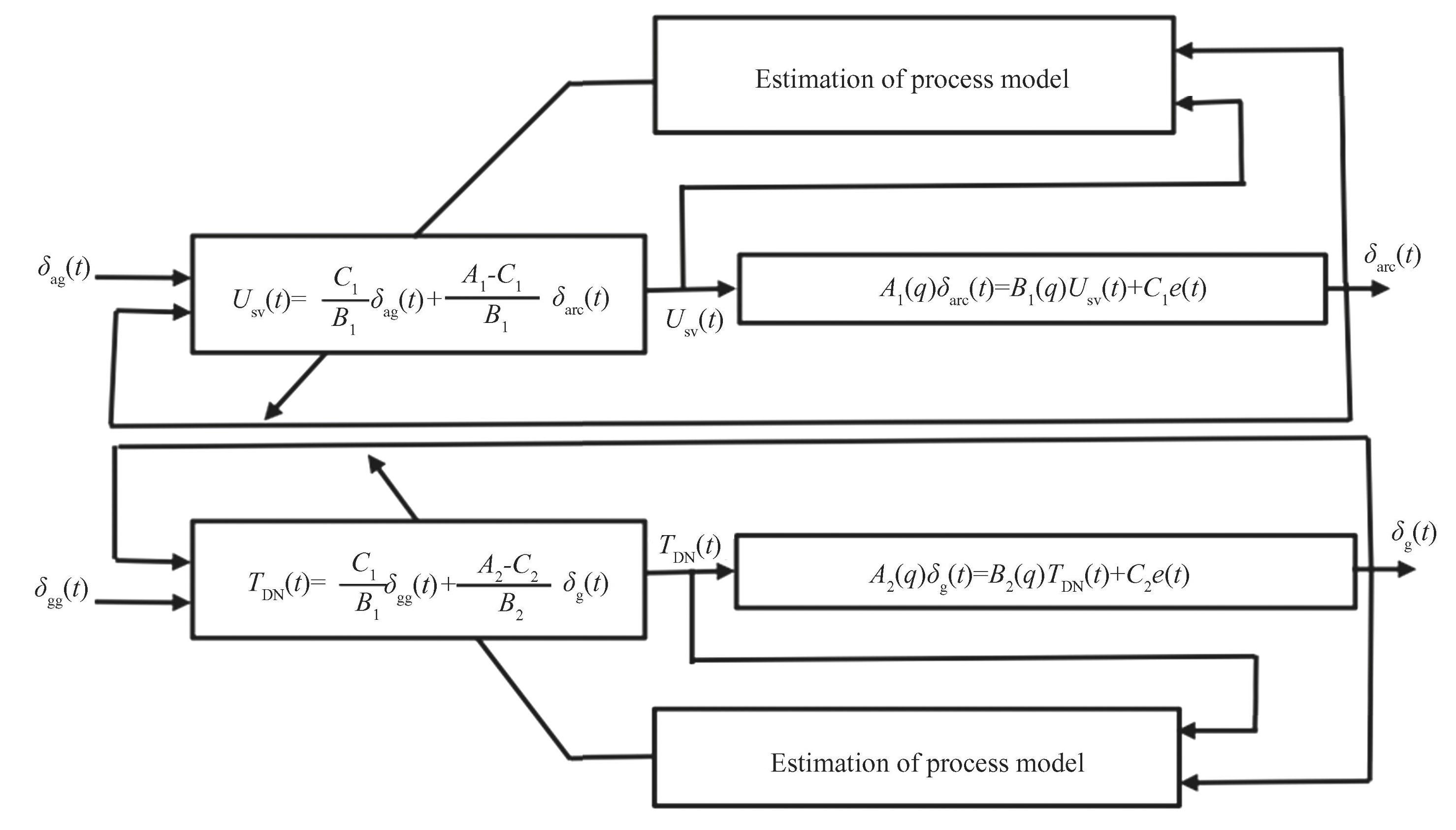
Fig.3A block diagram of a multi-variable adaptive control system for EDM process
3 Verification Test and Comparative Experiment
3.1 Verification Test
In this study, to demonstrate the practicality of the multiple variable adaptive control system for driving electrical discharge machining of Ti-6Al-4V, a verification test was performed. The experiment was performed on an NH850 EDM machine tool using a graphite electrode with a diameter of 16 mm to drill a blind hole without side flushing and human supervision, as listed in Table1. Machining parameter settings are listed in Table2.
Table1Experimental conditions

Table2Parameter settings

Fig.4 consists of 4 subplots. Subplot (a) shows the variations of gap environment in process, subplot (b) shows the machining states in process, subplot (c) shows the variations of electrode discharge time in process, and subplot (d) shows the variations of gap servo voltage. yee and yme mean the same thing, but in different manifestations, 1, 2, 3, 4 represent different values.
During this enclosed machining process, the gap environment state changed dramatically. Initially, the gap had a healthy environment with few chips, but in the end, it became a harsh environment filled with an over-abundance of chips. The reason was that as the blind hole got deeper and deeper, moving the produced chips upwards and out of the hole became more and more difficult. To cope with this intricate situation, it was recommended that the gap environment state guidance be made smaller once the machining had covered a specific length. In this way, the input discharge energy could be aligned with the machining environment. Fig.4 (a) shows that the entire process was roughly split into four subprocesses by guidance for four different states. Since the gap environment became increasingly harsh during the machining operation, the gap environment state guidance needed to be made smaller. This reduction helps gradually reduce electrode discharge times, resulting in less chips generation. Therefore, a proper liquid breakdown strength for the discharge process could be maintained.
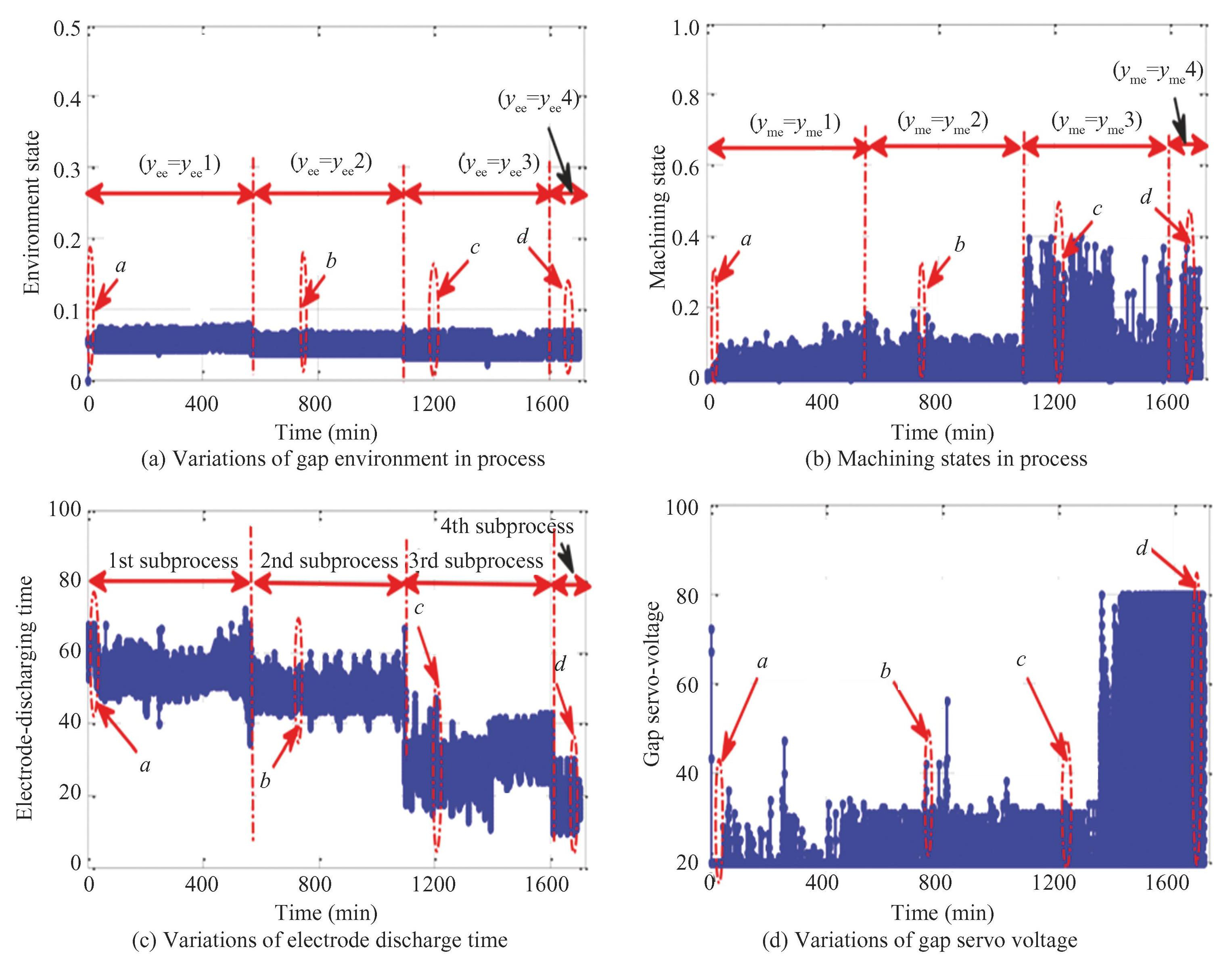
Fig.4The entire process of machining Ti-6Al-4V
Fig.4 (b) displays the machining state variations in the process. Theoretically, machining state range was (0, 1], and gap servo voltage range was (0, 150]. Practically, gap servo voltage range was set to [20, 150]. When the remaining chips in the gap cause the breakdown strength of the gap liquid to decline, the machining state will fluctuate around the machining state guidance as it attempts to track it. In such a situation, it is advisable to reduce the machining state guidance. This adjustment ensures that the fluctuations of the machining state remain within a stable range. Thus, it was necessary to synchronize the machining state guidance with the gap environment state guidance. Meanwhile, in Fig.4 (b) , guidance for four machining states can be found in the four sub-processes. It was obvious that the machining state values evolved from lower magnitudes to higher ones.Fig.4 (d) demonstrates that the gap servo voltage is modified so that the machining state tracks the machining state guidance.
The clamping of the Ti-6Al-4V workpiece and the machined blind hole, which was separated by wire EDM, are illustrated in Fig.5. According to Fig.5, side discharges during the machining operation make the actual dimension of the processed workpiece (16.48 mm) larger than the electrode dimension (16 mm) . The114 mm blind hole machining experiment on Ti-6Al-4V serves to confirm machining performance of the control system. Based on the calculated results of the final machining time and electrode wear, it can be deduced that the multiple variable adaptive control system for EDM enables efficient machining of titanium alloys with minimal wear.
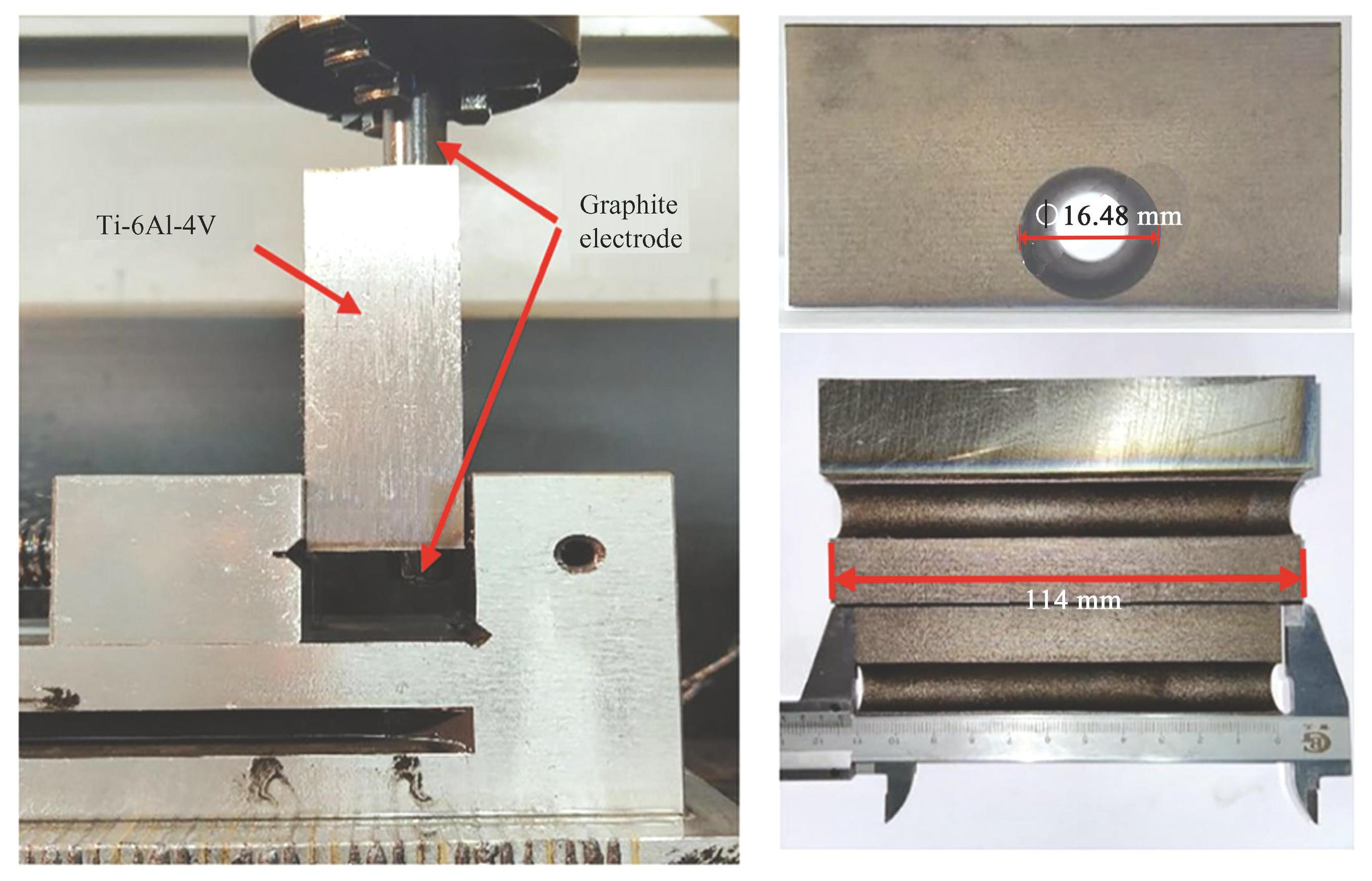
Fig.5Through-hole cut by wire EDM
Given that the workpiece was linked to the positive terminal of the tool power source and the graphite electrode was connected to the negative terminal, electrode wear was inevitable. Once the blind hole was fabricated, the electrode wear ratio was determined to be
3.2 Verification Test
Another verification test was conducted to testify the feasibility of the multiple variable adaptive control system in multiple electrodes machining of titanium alloy. The experiment involved machining three holes in a20 mm-high workpiece made of TC4 titanium alloy using three graphite electrodes, each with a diameter of 16 mm. The test was carried out on NH850 EDM machine tool made by Beijing NingHua Company. The major parameter settings are listed in Table3.
Table3Parameter settings

Three graphite electrodes were fastened in a round copper panel, and Fig.6 shows simultaneous multi-channel three-electrode discharge during machining.
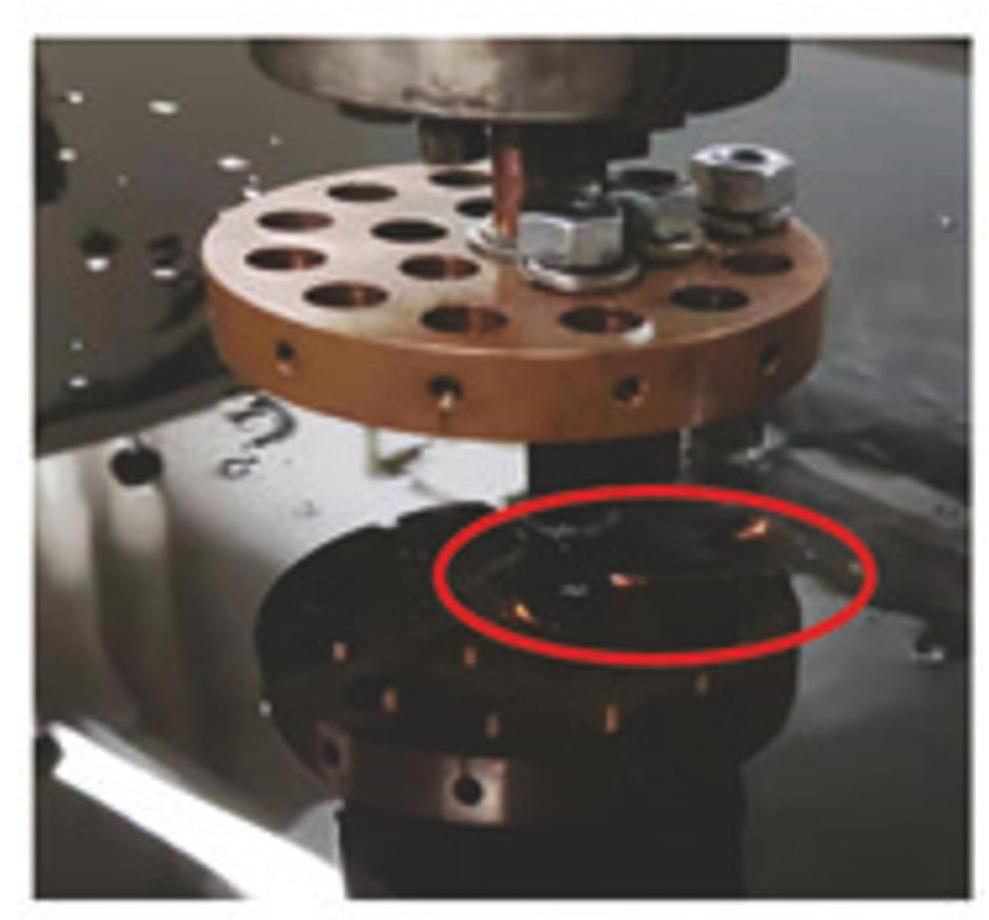
Fig.6Simultaneous three-electrode discharge during machining
The machine results are listed in Table4. Fig.7 shows machined holes in the titanium alloy.
Table4Test results

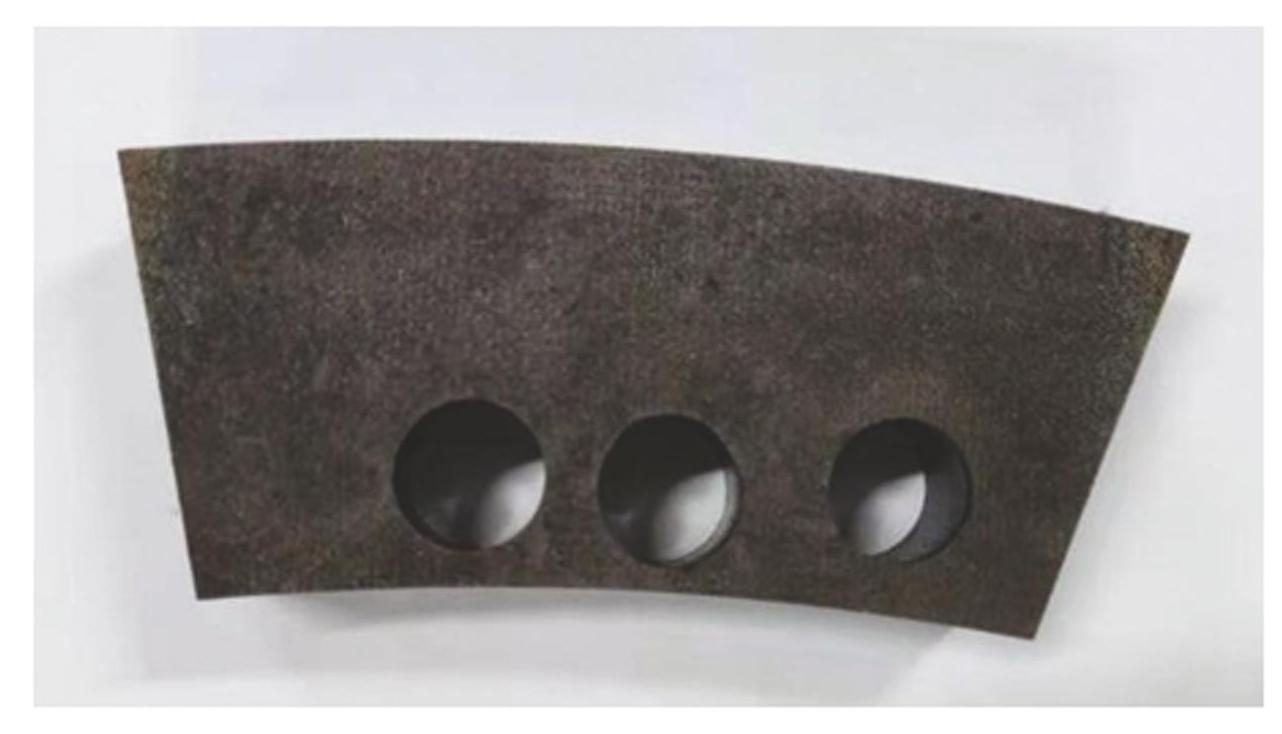
Fig.7The machined holes of titanium alloy material
3.3 Comparative Experiment
In order to compare the machining performance of the conventional EDM and the SISO (Single Input and Single Output) adaptive EDM, the proposed multiple variable adaptive EDM was conducted to testify the superiority of the multiple variable adaptive control system in machining titanium alloy. The experiment was performed on an NH850 EDM machine tool to machine a through-hole in a Ti-6Al-4V workpiece using a 16 mm diameter graphite electrode without side flushing and human attendance. The major machining parameters are listed in Table5. Note that the pulse-off time was specifically chosen to be less than one-third of the pulse-on time for the sake of decreasing electrode wear.
Table5Parameter settings

Comparative experiments employed conventional EDM and SISO adaptive EDM, with electrode discharge time as the control variable and machining state as the controlled index. In order to maintain a stable and fast machining, the control variable is adaptively changed in response to the variying machining state. These experiments were all conducted with almost the same tool parameter settings in Table5, except for the parameters selected as control variables. The conventional EDM only reached a machined depth of 12.000 mm, the electrode discharge time adaptive EDM reached a machined depth of 19.635 mm, but the proposed multiple variable adaptive EDM could finish the whole machined depth set at 90.000 mm. As shown in Fig.8, the holes were machined using the conventional EDM, an electrode discharge time adaptive EDM, and the proposed multiple variable adaptive EDM.
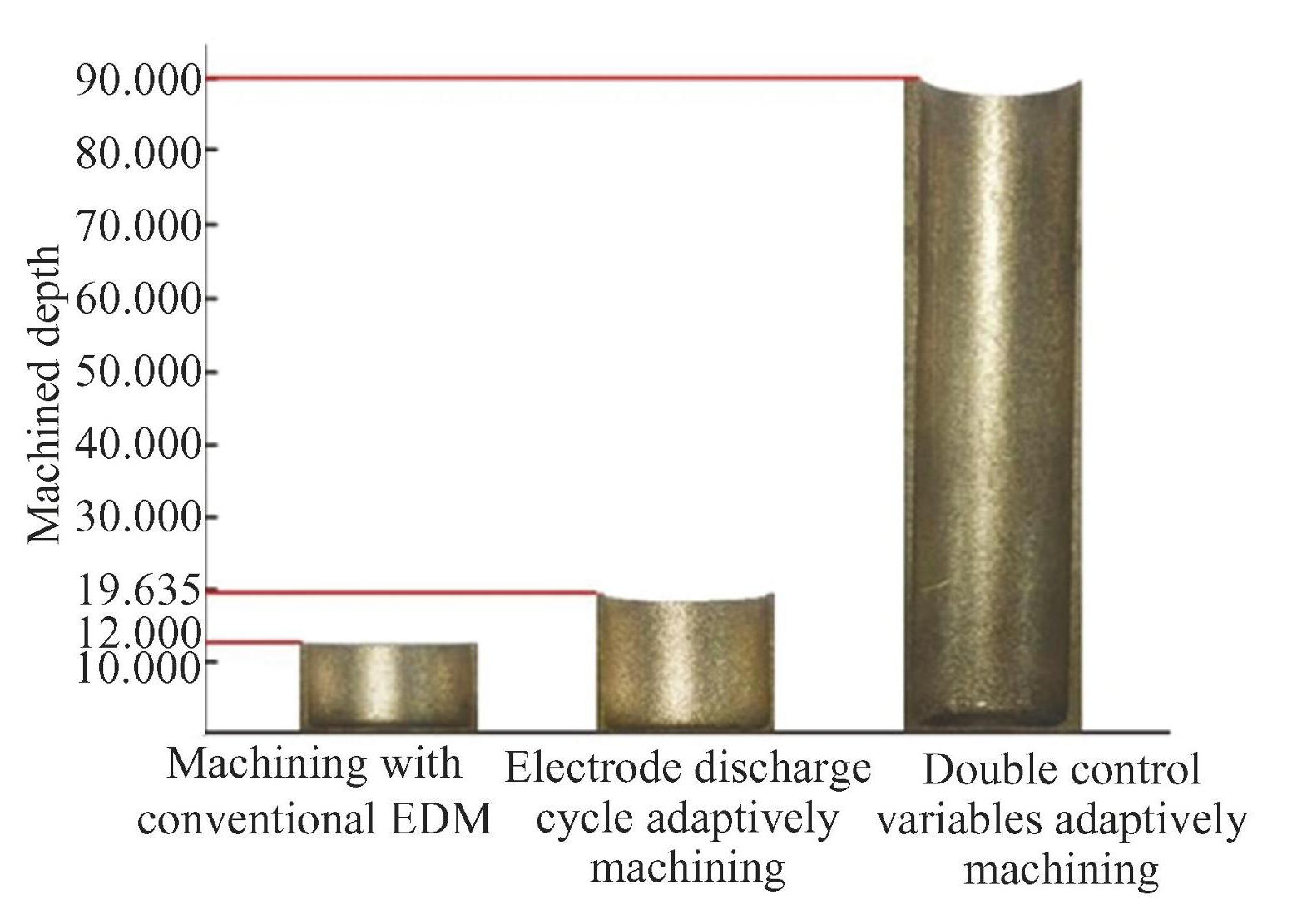
Fig.8Holes machined using conventional EDM, electrode discharge time adaptive EDM, and multiple variable adaptive EDM
4 Conclusions
Machining titanium alloys via EDM poses significant challenges. The low specific heat coefficient and thermal conductivity of titanium alloys cause a rapid increase in the local liquid temperature within the machining gap following pulsed discharges. This temperature rise typically reduces the breakdown strength of the gap liquid, triggering arcing pulses during the machining process. Given that the low thermal conductivity of titanium alloys is an inherent and almost unalterable characteristic, the sole solution to address the difficult machined nature of these alloys through EDM is to develop a method that can maintain the breakdown strength of the gap liquid without a sharp decline while still enabling effective pulsed discharges.
To tackle this issue, this study first identified three essential conditions that need to be satisfied and then proposed a novel approach for machining titanium alloys. In a groundbreaking move, a multiple variable adaptive control system was developed. The following are some of the key conclusions drawn from this research:
1) In terms of electrical discharge machining of titanium alloys, the gap liquid breakdown strength, an important factor affected by the gap distance and the chips remaining in the gap, played a decisive role.
2) A novel multiple variable adaptive control system was developed. In this system, the gap servo voltage, which is proportional to the gap distance, determines the discharging types of pulses. Meanwhile, the electrode discharging time determines the gap environment state, and this state is directly influenced by the chips generated within the gap.
3) To demonstrate the effectiveness of EDM in machining the titanium alloy Ti-6Al-4V with the support of the newly developed multiple variable adaptive control system, a114 mm long blind hole was machined using a16 mm diameter graphite electrode. The operation was performed without side flushing and human intervention. Over the entire machining duration, the machining efficiency remained largely unchanged, and the electrode wear ratio was 21.664%.
4) Three experiments by conventional EDM, electrode discharge time adaptive EDM and multiple variable adaptive EDM were conducted. The results of the experiments showed that the depth machined by the multiple variable adaptive EDM was more than 7.5 times that of conventional EDM and 4.58 times that of electrode discharge time adaptive EDM. Both adaptive EDMs exhibit faster machining rates than conventional EDM.
5) Machining multiple holes in a20-mm-thick titanium alloy panel using three16-mm-diameter electrodes without any flushing assistance and human attendance in the whole machining process, in a closed machining situation of the titanium workpiece, showed that multi-channel discharge machining could achieve high machining efficiency and low electrode wear.
